
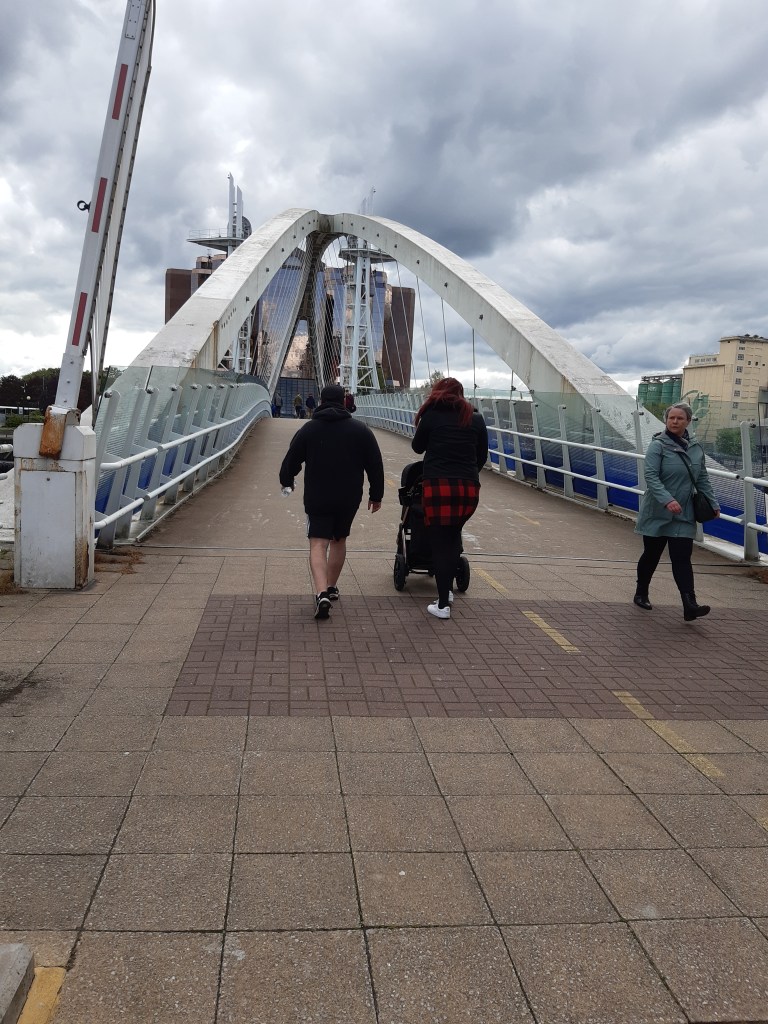
Going into town with a little A5 pocket sketchbook, charcoal, conte stick with a brush and water I took a wander around Manchester to sketch some moving figures. I had to wait for a sunny day so I could wear sunglasses and felt a little creepy to be honest, but managed to attempt to get some interesting ‘movements’ of figures and interactions. I found myself at Salford Quays outside the Lowery Centre, sketching the passers by on a Sunday afternoon.

Cyclists wizzed by, walkers, and a little kid who slide down the rail then posed for me as could see I was drawing him! I think he was rather pleased when I showed him the sketch!
It was interesting to try and draw a moving figure and trying to see more of the movement as opposed to the form.

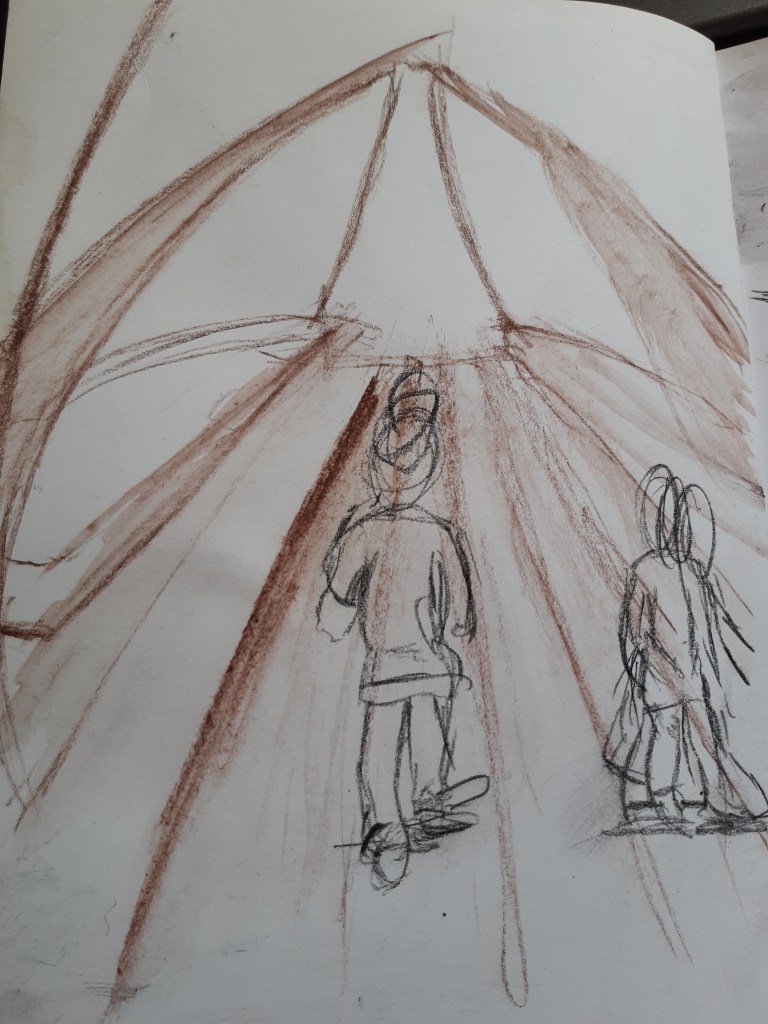

Above I ended up drawing the lines of the pathway, towards the War Museum and a few figures. Quickly capturing the torso angle and concentrating on the movement of the limbs I attempted to overlap the differing postures to try and create a sense of motion. In the last image I superimposed images of a guy getting into his car and added some movement lines to create flow. I found that by adding the perspective lines of the background helped to give the drawings more depth and a sense of motion.
Capturing movement is very different from drawing a pose. I found you have to prioritise with the detail you think important, ie motion of limbs, and neglect the other details like muscle structure tone. It’s more of a fluid aura that carries the figure as opposed to drawing the figure itself while still which is an interesting concept, how to portray that moving aura in a still image?
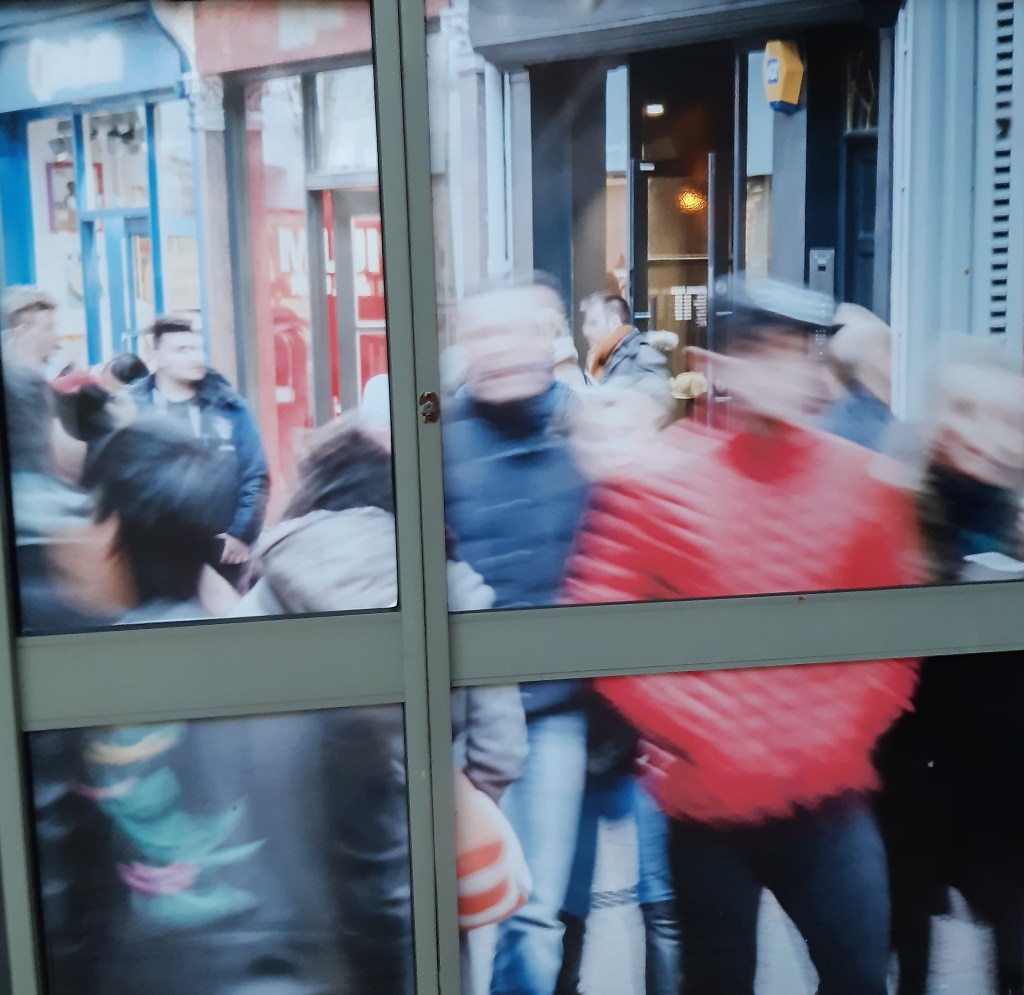
Photo of moving figures with blur 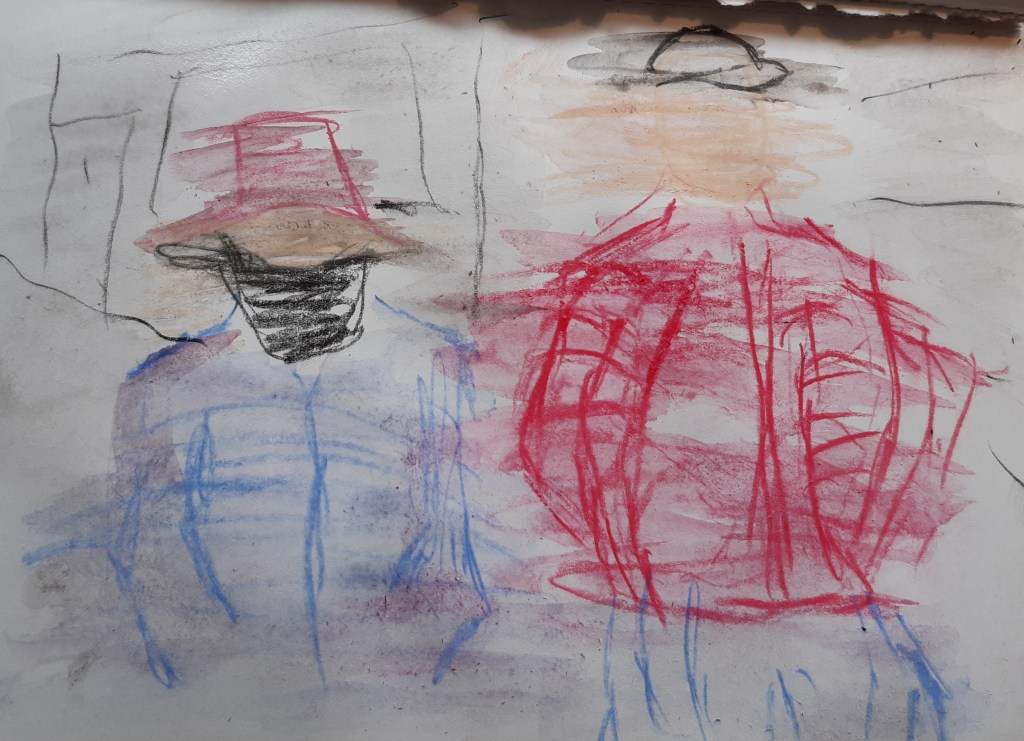
moving figure, colour pastel. A5
I caught some moving figures with a longer exposure so I could get the blur of their movement and try to recreate it with smudges of coloured charcoal and water.
From there I decided to take a look at a few artists and sculptures who based their work on this theme of static movement.
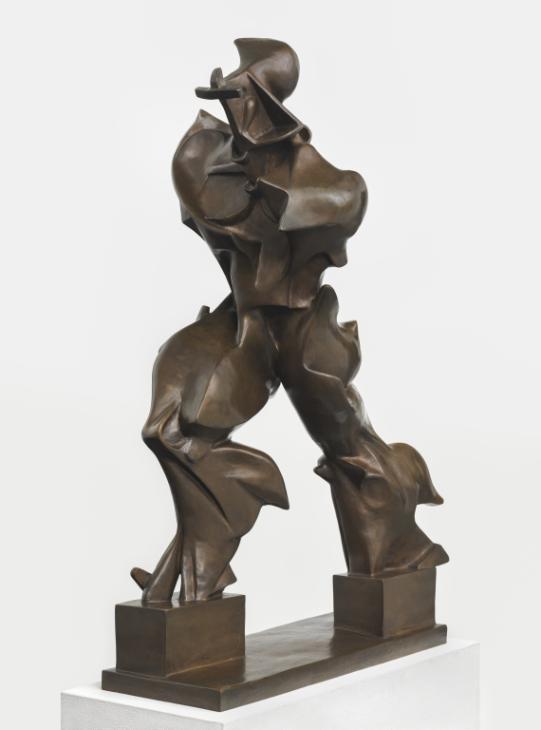
What I was drawn to about this piece was the movement takes over the form. The form is still there, but the movement of it is predominant, the rawness of the angles and lack of clarity all give a sense of motion, each muscle that would be working harder seems to be exaggerated such as the leading thigh, calf muscles, twist of the torso and flail of the rump. A perfect example of stillness in motion.

Duchamp being the legend that he is is with the Dada movement was obviously influenced by the cubist movement which was happening at around the same time in the same parts of Paris. This is an incredible example of taking movement over form and structuring it into a feeling of motion, quite possibly you could not see what the image is, (a nude descending stairs), but the main theme is the motion and not the image or detail.
I guess this begs the question between image/and/or/ detail? Do I want to show reality or realism, or emotion, movement, flow and imagination? I feel these are very different takes on artwork in general, possibly since the Renaissance and possibly further back than that, but then again I ask myself the question……what is art? My opinion, if it works for you, go with it……
References
(1) ‘Unique Forms of Continuity in Space. Umberto Boccioni, 1913. Bronze statue, 111.44 cm Web: https://www.tate.org.uk/art/artworks/boccioni-unique-forms-of-continuity-in-space-t01589
(2) ‘Nude Descending Staircase’, Duchamp M. 1912, oil on canvas, 151.8 x 93.3 cm (Philadelphia Museum of Art). Web: https://www.khanacademy.org/humanities/art-1010/dada-and-surrealism/dada2/a/marcel-duchamp-nude-descending-a-staircase-no-2
 Eeyanski Arts