
Something I realized when looking at and copying statues was the fact that they are still. This may sound strange, but I saw that the skill of a sculpture artist was the ability to convey movement and emotion in an inanimate form. I realized, interesting that there were certain parts of the body that conveyed this. These are just my assumptions…
- The ‘S’ shape of the torso creating a natural essence of the spine. Seen in many paintings and sculptures including Hogarth’s diptych of Beer Street and Gin Lane, as I believe the painter depicted himself in this way (1).
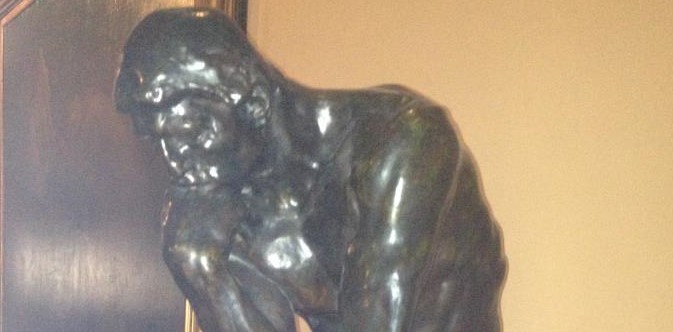
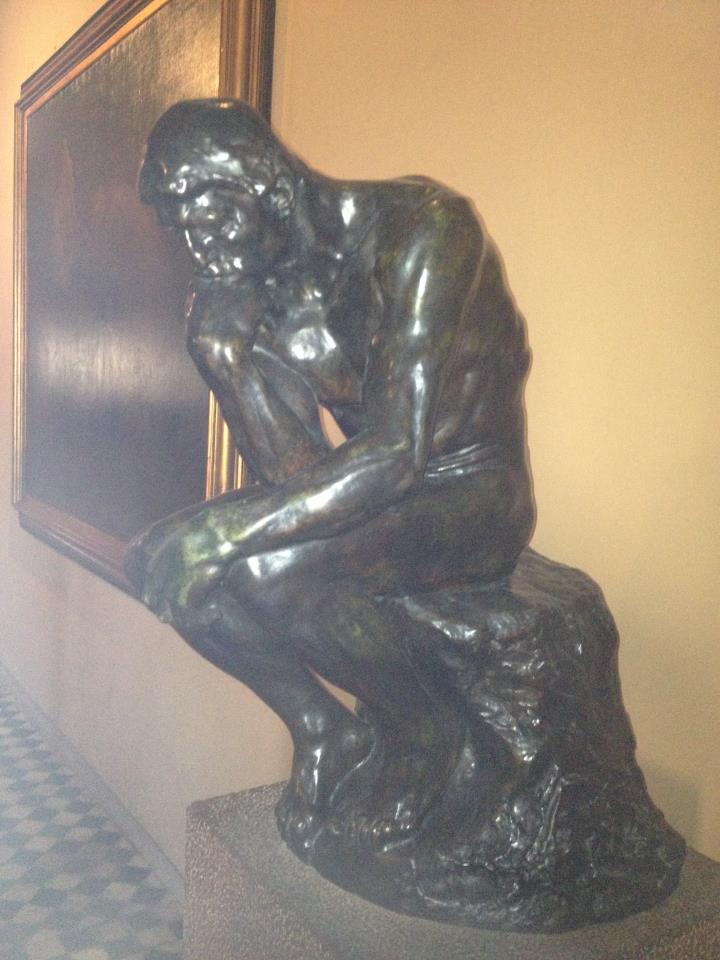
- The hands and feet radiate an understanding of a persons experience and mind frame. Especially placed in a certain way, ie relaxed, tensed, clenched, such as ‘The Thinker’ by Rodin A. (2), I started to appreciate how to communicate emotion through subtle gestures.
- Another interesting area I picked up on was the point between the brows of the forehead. Without even focusing on the eyes or the mouth, i think the hands, posture and the point between the brows can go further than express an emotion, but tell a story about someone’s emotion. Something I noticed in a lot of the statues I viewed.

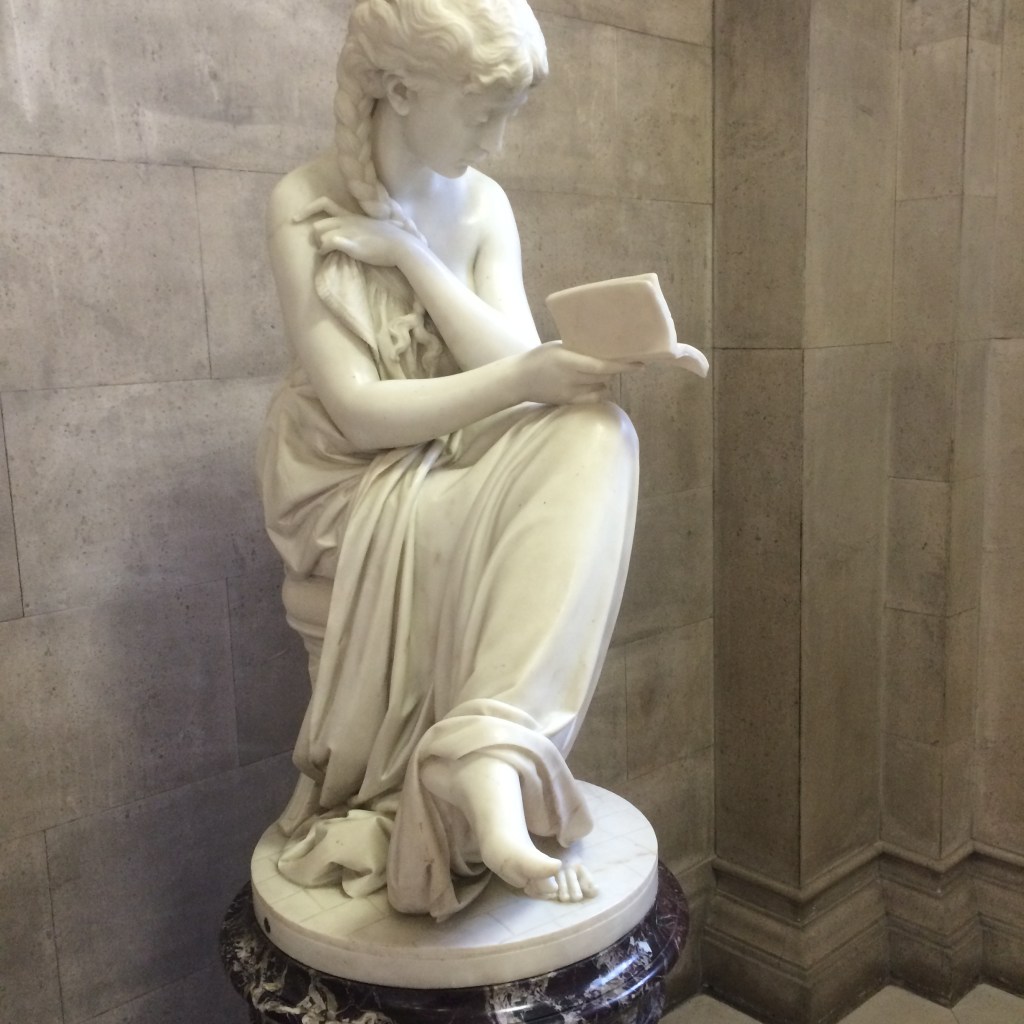
A perfect example I found is a ‘Woman Reading’ in the Manchester Library. I couldn’t find much information on her apart from she was brought in from Italy: http://www.talkingstatuesmanchester.co.uk/statues/girl/, by Daniel Adamson. I do however think that this a perfect example of what I observed above. The ‘S’ shape of the torso, the extension of the first finger of the left hand, the protrusion of the big toe and the focus of the fore brow right towards the book, speak a million words for something that doesn’t move.
This is something I started to appreciate for aesthetics i the human figure. I guess something that we all pick up subconsciously, the hands, the feet, the form. I realised that is what makes a ‘great’ sculpture. Something so still that can convey so many ideas or emotions.
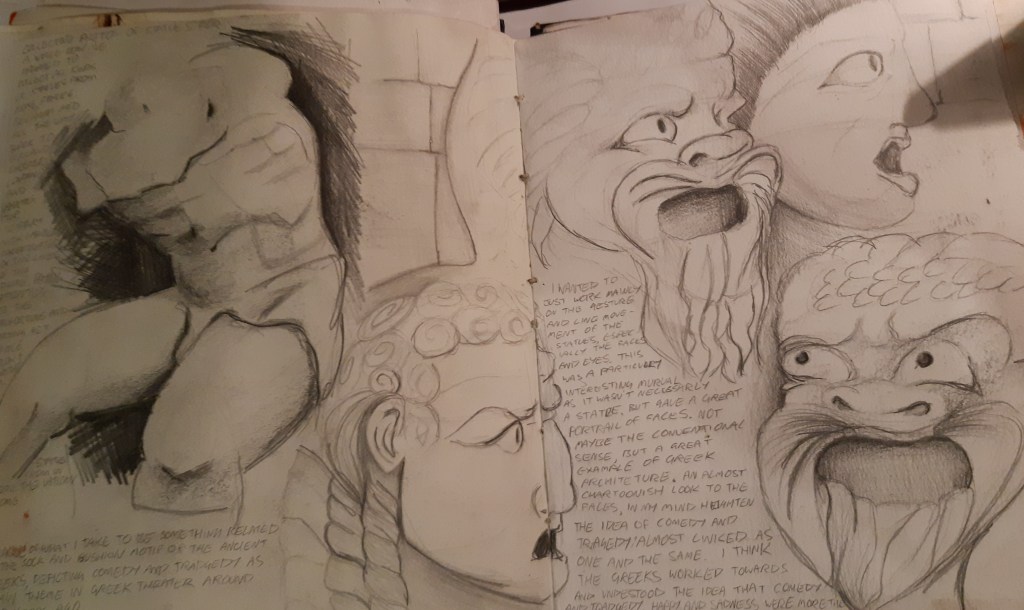
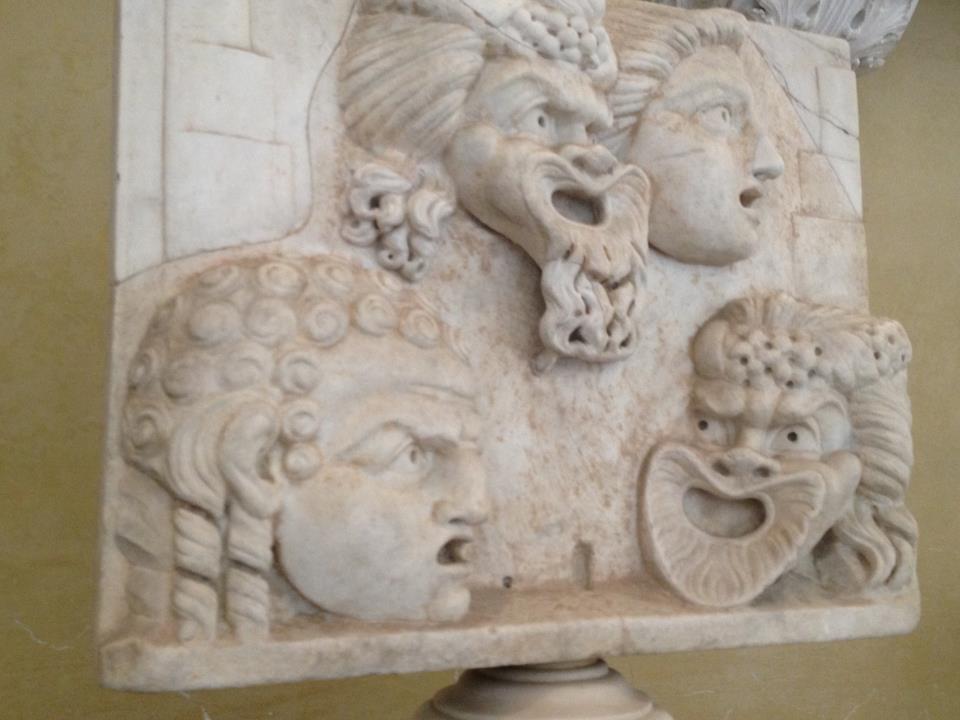
These were a few sketches from Roman sculptures that I had taken photos from. The most important details that I took notice from was the eyes and the mouths from the ‘Sock and Buskin’ mural on the left and the ‘S’ shape of the torso on the right. I wasn’t so much interested in detail, but more with form and expression.

With the idea of ‘movement’ in mind with regards to ‘statue’ I did a couple of sketches of some photos I had taken earlier of statues that reminded me of the use of movement in the human body, without movement. I guess a dynamic that can be applied to art to give it 3 dimensions on a flat plane, or a movement to a static statue.
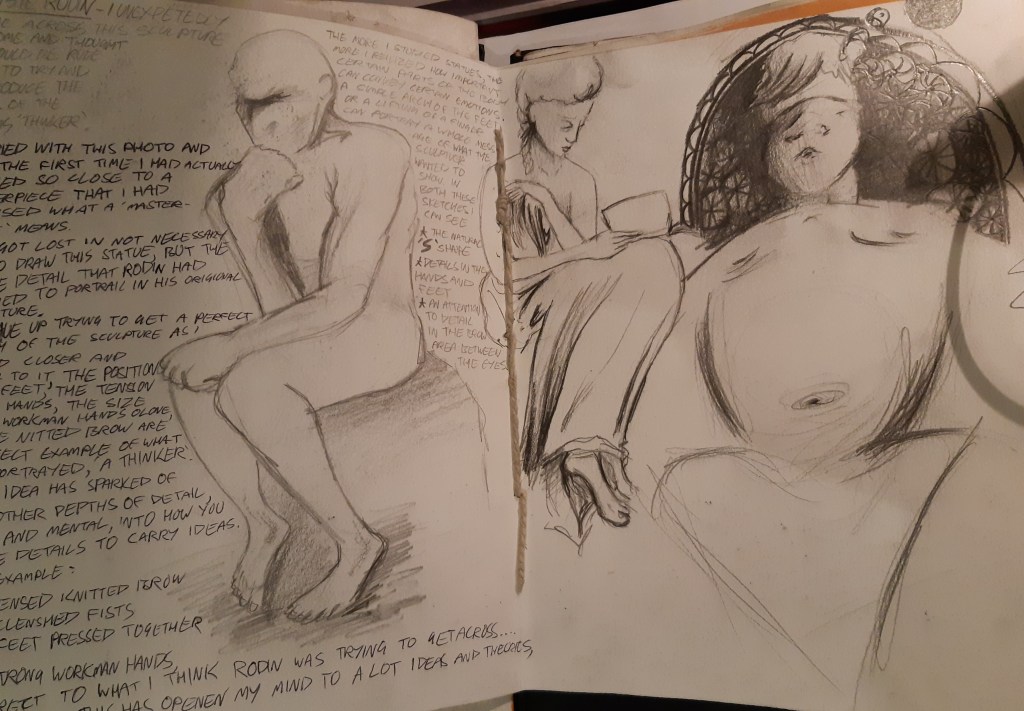
The hardest thing I found was to re-create the intensity of the feet an the hands. For some reason I find this is an incredibly expressive part of the human anatomy, something that can tell a story more than words, and artists have known this for years. I guess I’m just starting to realise .

The final piece was pictured on Fleet Street in London of an up shot of a woman in pose. I loved the intensity of this angle and pose so I decided to draw it in white coloured pencil.
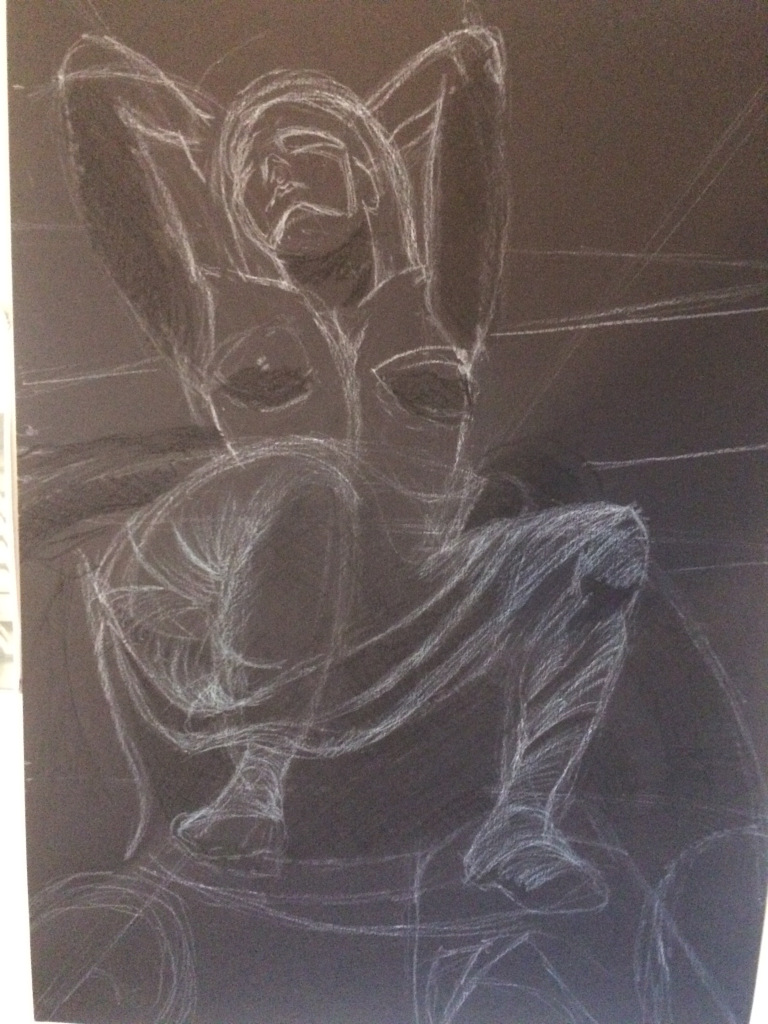
Making a preliminary out line sketch to get the feel of the body shape and I shaded it with rough lines to show the contours of the limbs and torso.
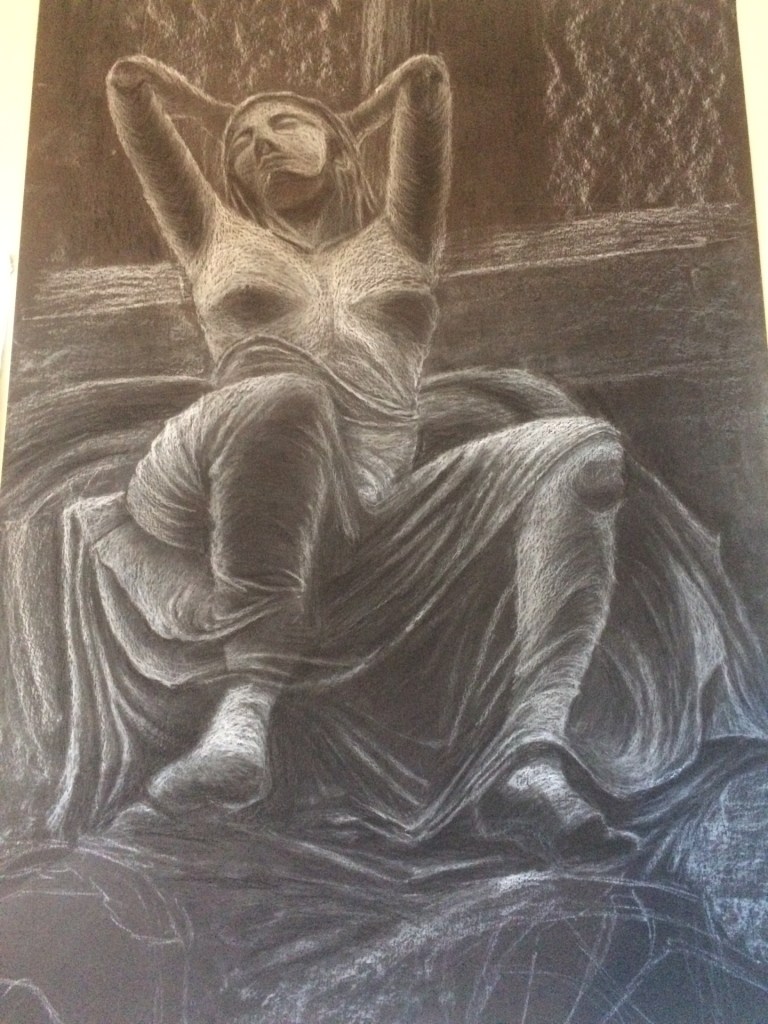
Looking into sculpture was an eye opener for me to see the detail into making something still, into something alive.
(1) ‘Beer Lane’ (detail) Hogarth W. One half of diptych. Etching and engraving. 348 mm x 298 mm. 1751. Collection: Royal Academy. Link: https://www.royalacademy.org.uk/art-artists/work-of-art/beer-street-1
(2) )’The Thinker’ Rodin A. Bronze sculpture. 72 x 30 x 58 cm. Personal photo from The Vatican.
(3) ‘The Reading Girl’ Manchester Library. Photo taken but no information able to get
 Eeyanski Arts