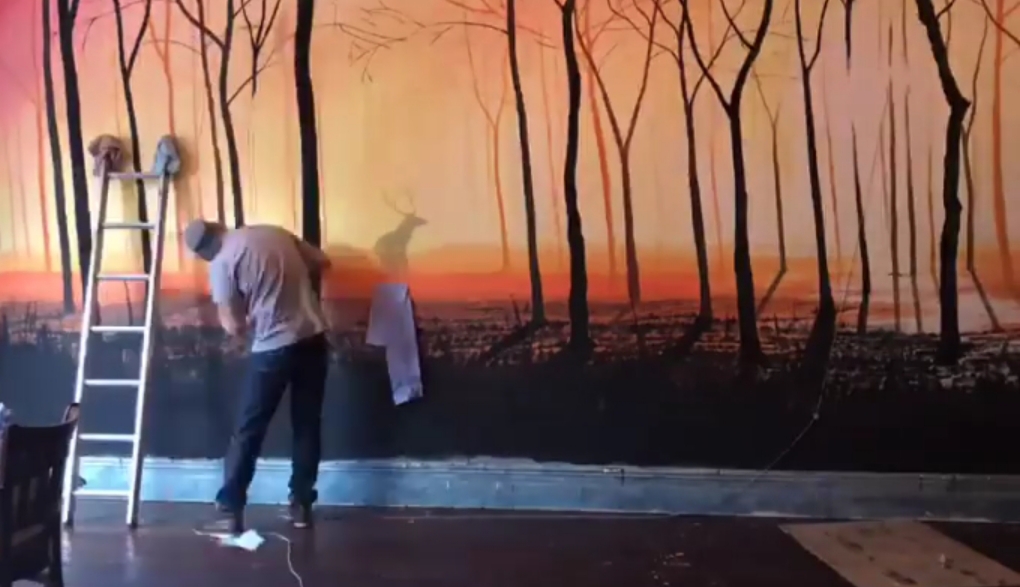
Working outdoors is on a completely different level than studio drawing. Not just the weather, preparation and organisation, but simply choosing a view and deciding how much of that view to include is all part of the challenge to capture the essence of an expanse.
Nature can be complicated and detailed at first sight but what I learnt to do with these exercises was to group detail, such as tree formations, create textures of leaves, foliage or shrubs using less detail, but conveying more of the movement and character of nature.
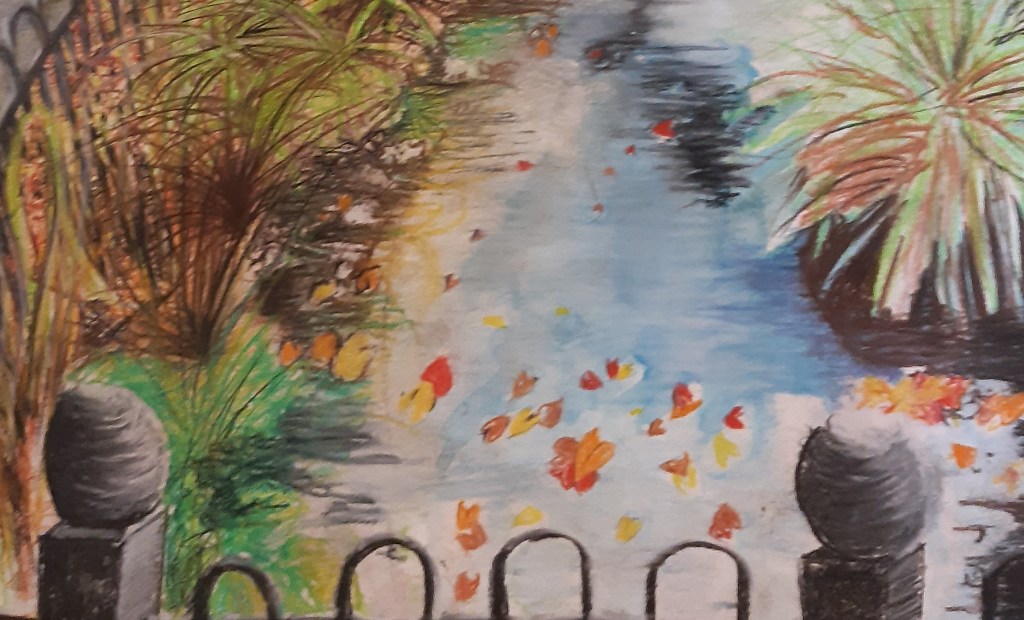
After working indoors and using a lot of mono chrome charcoal and graphite I was happy to experiment with a bit more colour. I think the outdoors deserves some colour and seeing the change in seasons made me aware of the different palettes needed for each time of year. Fletcher Moss Gardens (above detail) was a perfect example of the need for bold late Autumn colours, or the sharp vivid colours of a sunset in the below example.
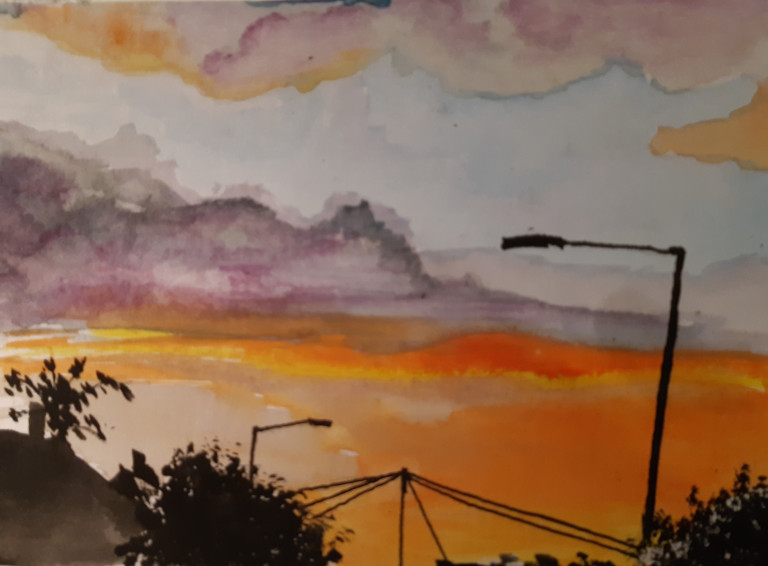
I found the points from this section vastly helped with my understanding of how to ‘see’ things. I started noticing details of my surroundings that I had never seen before. Light reflections in clouds, patterns in the grain of tree bark, the lining up of perspective lines and textures in nature. These have greatly helped me with understanding how to render colour, and the relationship with colour and harmony to produce an interesting picture.
Composition was also another aspect that I found strikingly different to the composition an indoor still life. Organic lines and perspective play a big part in making an outdoor composition just as much the position of a still life, such as this coloured soft pastel drawing of Fletcher Moss. Also comprehending fore/mid/backgrounds to form a composition and how to treat them with regards to texture/clarity and detail to draw the viewers attention was an important part of creating a harmony/intensity and interest in a scene.

Using the foreground tree branches to guide the eye to the middle of the picture and down across the railings to the flat railings at the front of the picture to put the viewer into place.
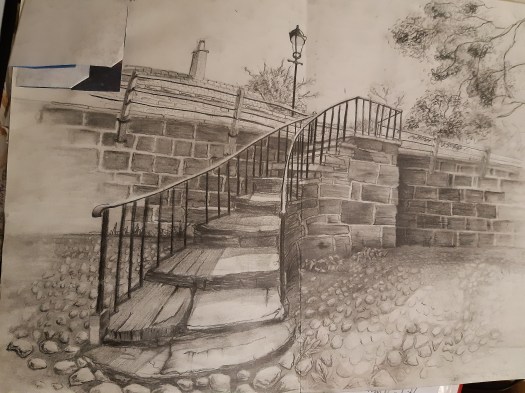
Time management was also something that I found important to prioritize, which I found stripped down my perception to what details and gestures were important. It is different to sit in a studio for days scrutinizing a photo for detail to having to prioritize on detail and gesture. I found it gave a purer rendition of a scene, such as the 360 degree exercise where I used 15 minuets each 90 degree turn to draw a 360 degree view.


360 degree sketches
Organisation of how I approach each exercise is starting to form a structure. Using my log for ideas and experiments, my sketchbook for on field sketches which build up towards a final piece. I find this method allows my ideas to flow and develop.


Example of log book experiments.
I feel that these exercises have been beneficial mainly in the key points stated above and I think that I will be able to utilize them in other areas such as quick sketches in figure drawings and organisation to save time, and my sanity!
 Eeyanski Arts