

My point of reference to the whole topic of the human head and face is a book by Andrew Loomis, ‘Drawing the Head and Hands’, Titan Books, Andrew Loomis.
Sectioning the head into thirds and adding in the detail was one lesson, but drawing a grid onto a plastic golf ball and pressing wooden skewers through the contact points was the best learning tool for me to practice rendering the head and face.
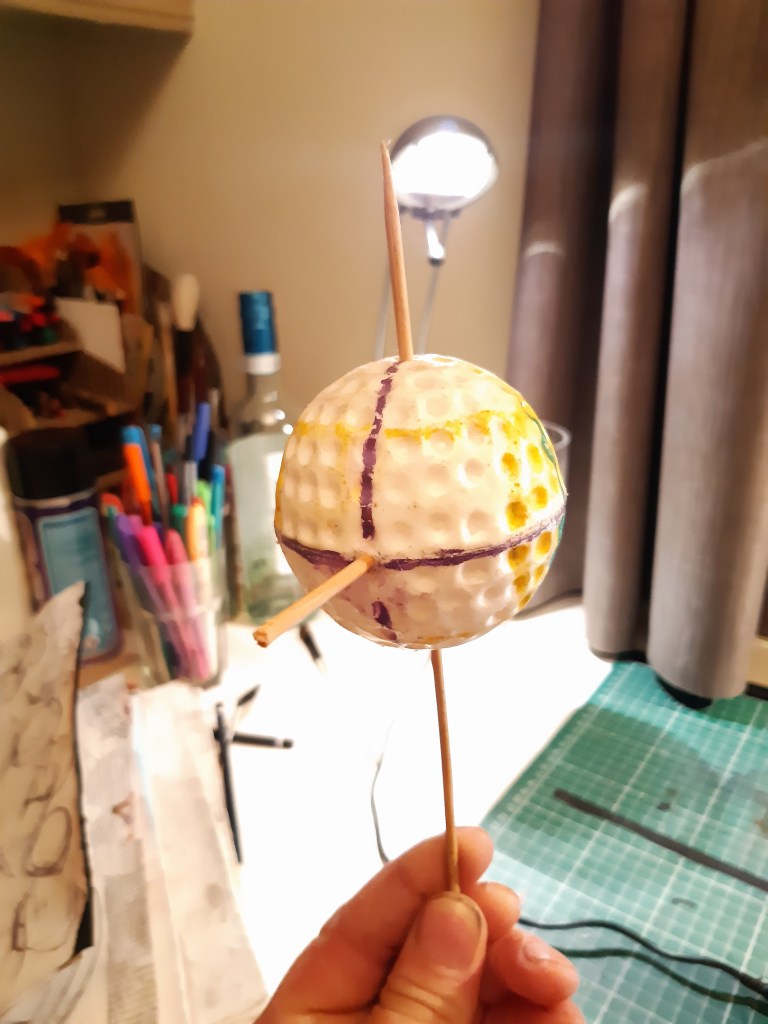
Apart from peoples personal features, the head, face and skull tend to fall into a system of proportions with little variation in regards to eye level, nose and mouth position in comparison to the pivot point of the neck situated just behind and slightly below the ear.
Contour lines are a good thing to keep in mind when drawing the head, especially when bending or twisting which is why I found my trusty impaled plastic golf ball helpful.
As Loomis mentioned in his book Drawing the Head and Hands, (P20 ‘Be able to draw the unseen ear’……which, at the time puzzled me no end. I later learned what he meant. A HEAD IS NOT DRAWN UNTIL YOU CAN FEEL THE UNSEEN SIDE.’
Draw a circle, half it with a line. Cut the top half into a third to give you the hair line. The mid point is the brow line. A third below that is the tip of the nose line, add another third on downwards and you get the chin line. draw a square connecting all the points inside the circle and you get vertical lines narrowing the circle to where the ears should be located and the rest is joining the dots to get a generic human face.
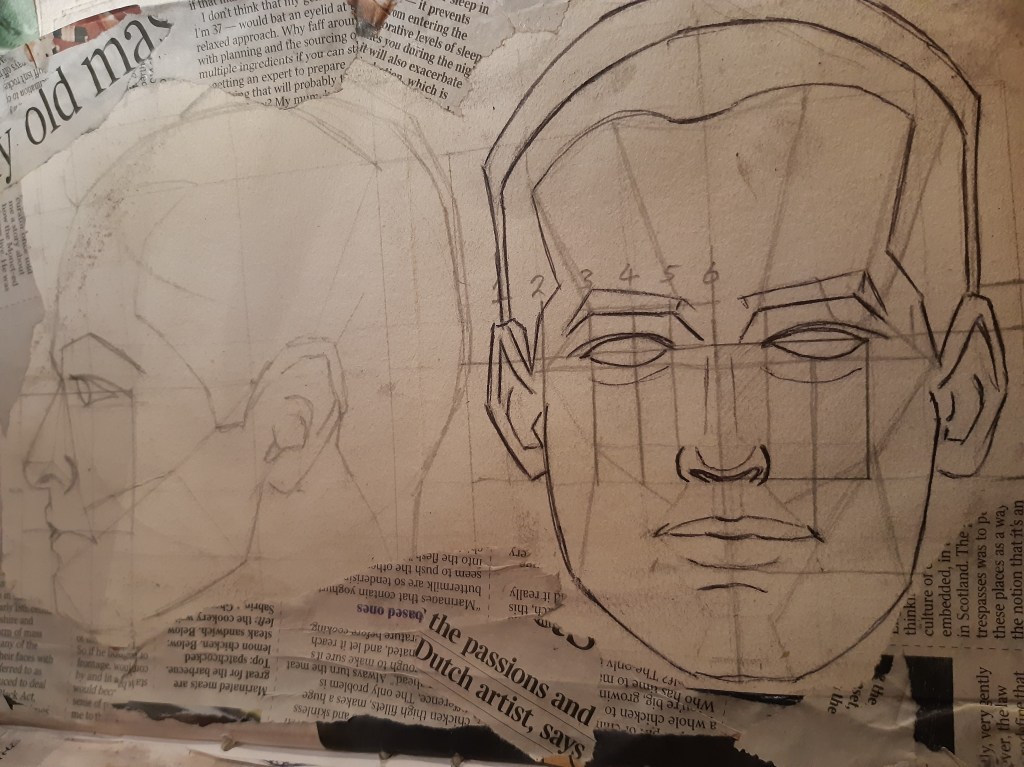
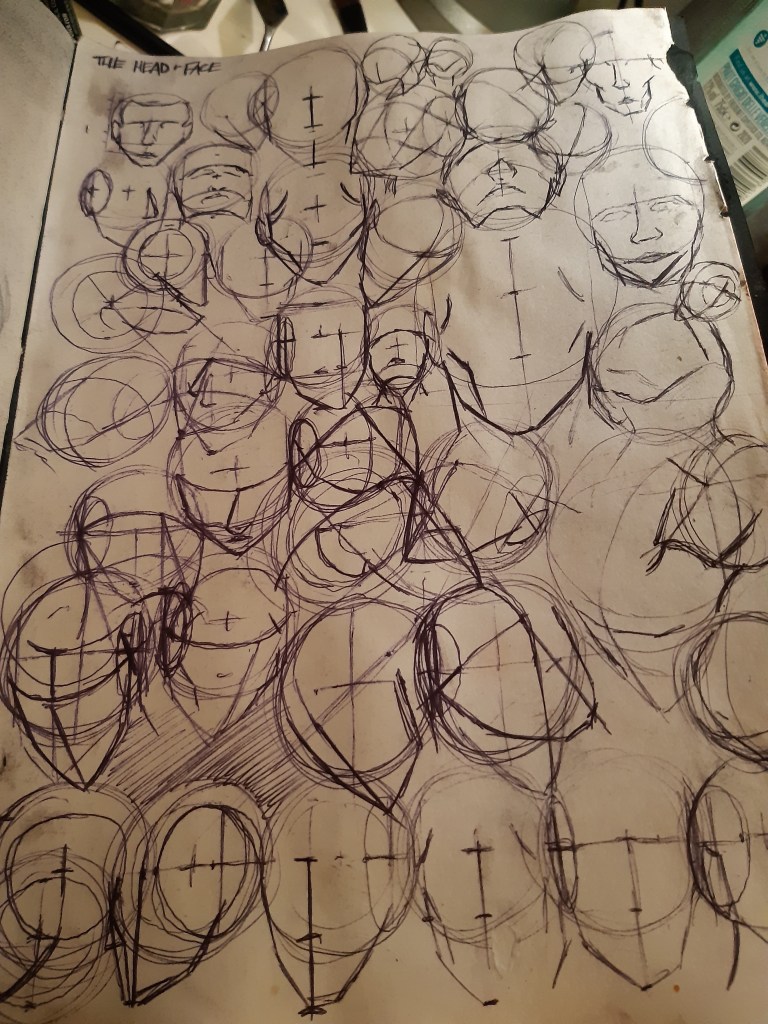
From here I just started to experiment with different angles, concentrating on the direction of the gaze from the centre of the mid brow and the pivot point of the neck. When I draw a figure I find it helpful to map these two features out before anything else as I believe these are the features that carry the body in movement.
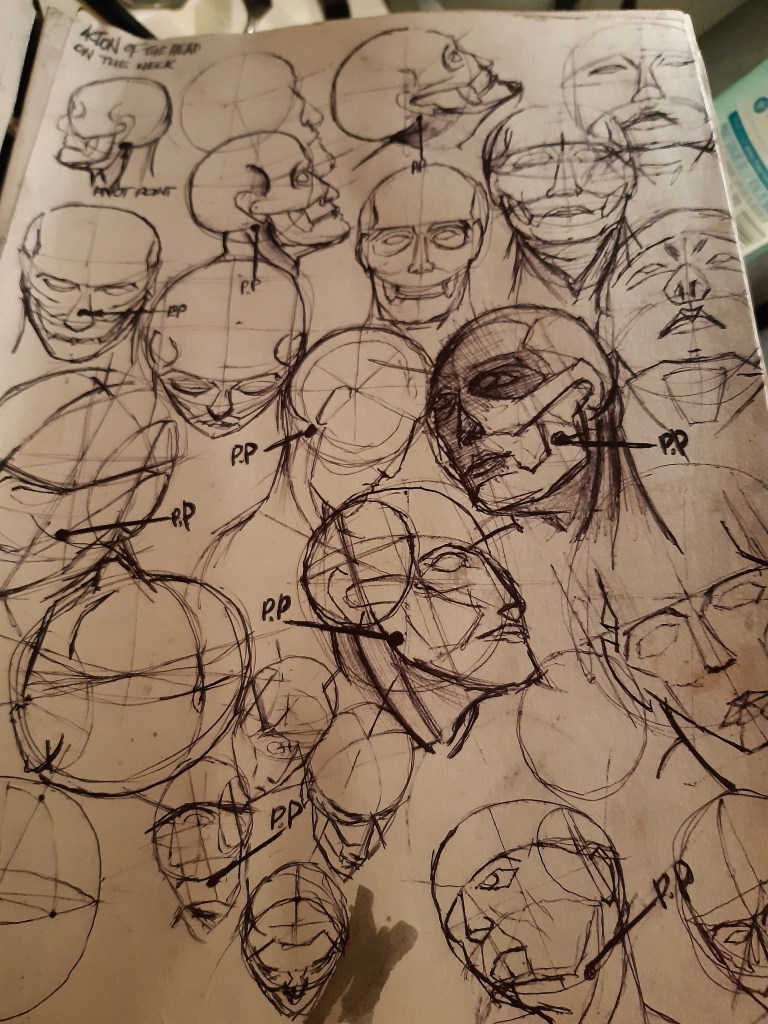
I then looked at the pivot point of the head when it is tilted off axis and how the neck muscles behave under stress and adjustment.
From here I decided to try and add some detail and put the ‘humane on the frame’ and see if I could get a convincing face together……

Andrew Loomis’s techniques have defiantly worked for me when rendering the head and the face, especially at different angles. Using this system, and adding your personal perceptions of peoples features onto this frame works really well for me. I will definitely be sticking to and developing this method.
 Eeyanski Arts