
I decided to play around with a few different techniques with this exercise, so I started out drawing 6 different angles of my face. Using charcoal and not taking it off the paper I drew a continuous line of different views of my face from a small pocket mirror.

This was a great exercise to take the attention away from making mistakes and just draw what you see. The images of the hands were draw, left hand with the right hand, and right hand with the left. I personally thought that with using the left hand I was concentrating more, and although I didn’t have as much control as the right hand, I thought the left handed drawing gave a bit more imagination. The bottom image was drawing the hand without looking at the paper. This was a great way to focus on the link between the physical image, mental image and the connection to the co-ordination with the hand. It’s a big difference from simple hand-eye co-ordination. I think I managed to make myself look like a cross from Stevie Wounder and a psychotic truck driver to be honest.
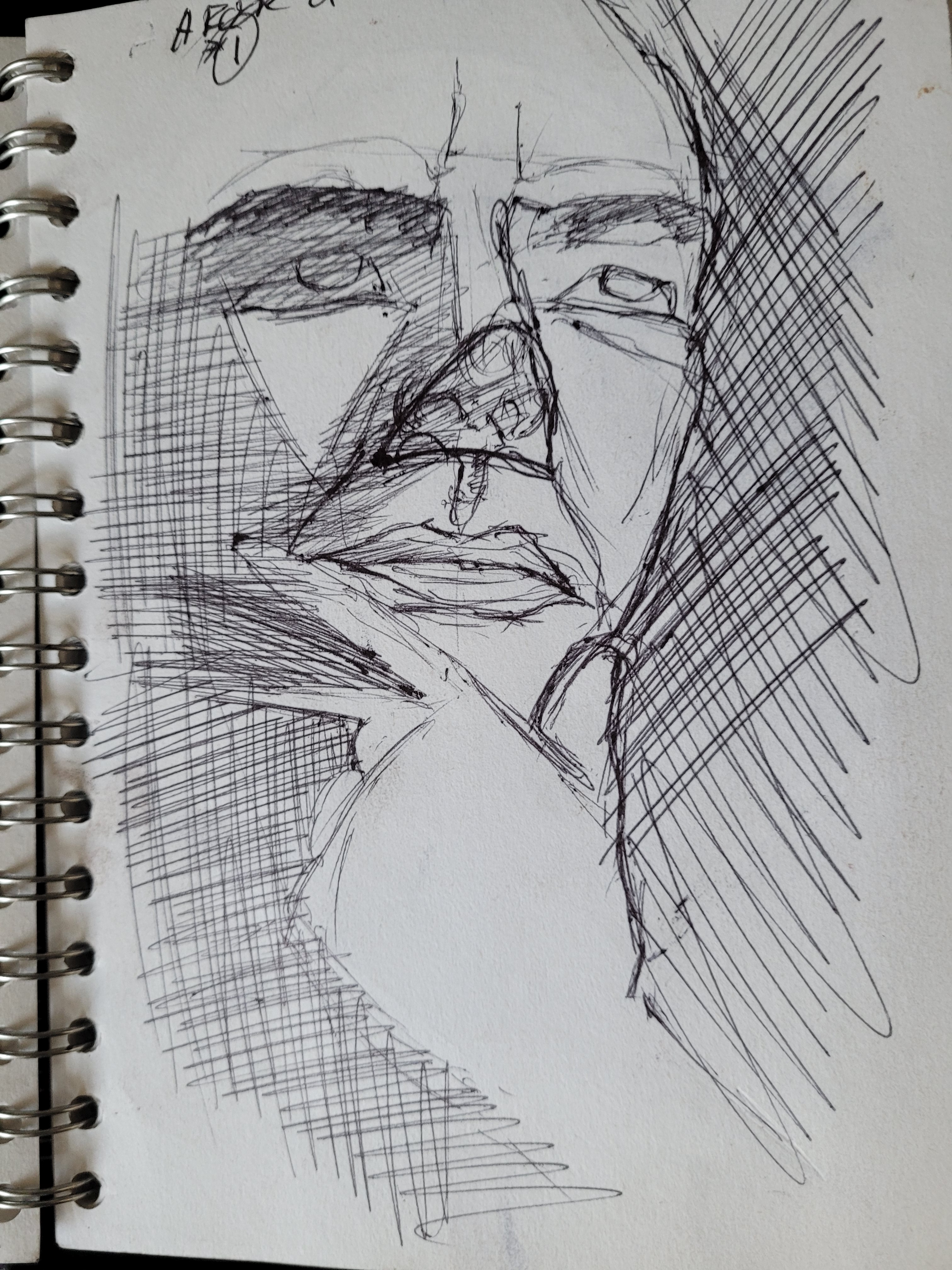
I carried on and sketched my face from a mirror without using reference lines, just using what I saw and relating it onto the paper.
A few more quick sketches so I could get the hang of drawing a face, (my face!) at different angles helped with the fluidity of drawing what I saw without mapping the face out in such a ridged way as say the Lumis Method. It’s a great way to look at the dynamics of the face and to break it down into sections and measurements, but this was a good exercise to just draw what I saw, making me pay closer attention to reference points and just gut instinct as opposed to mapping out a framework for the face to fit into. Below are three quick sketches of foreshortened faces solely using reference points of various features in relation to one another.
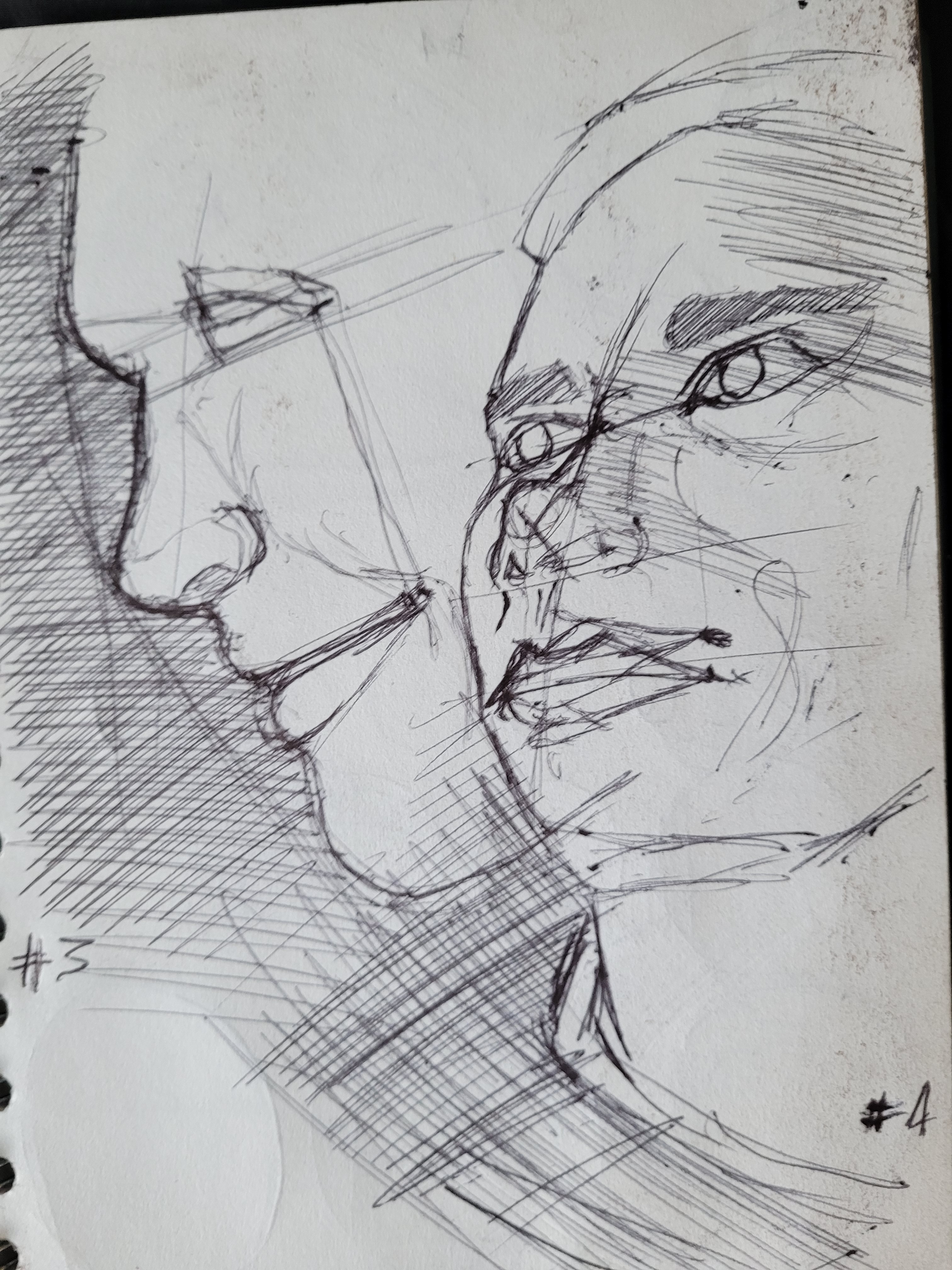
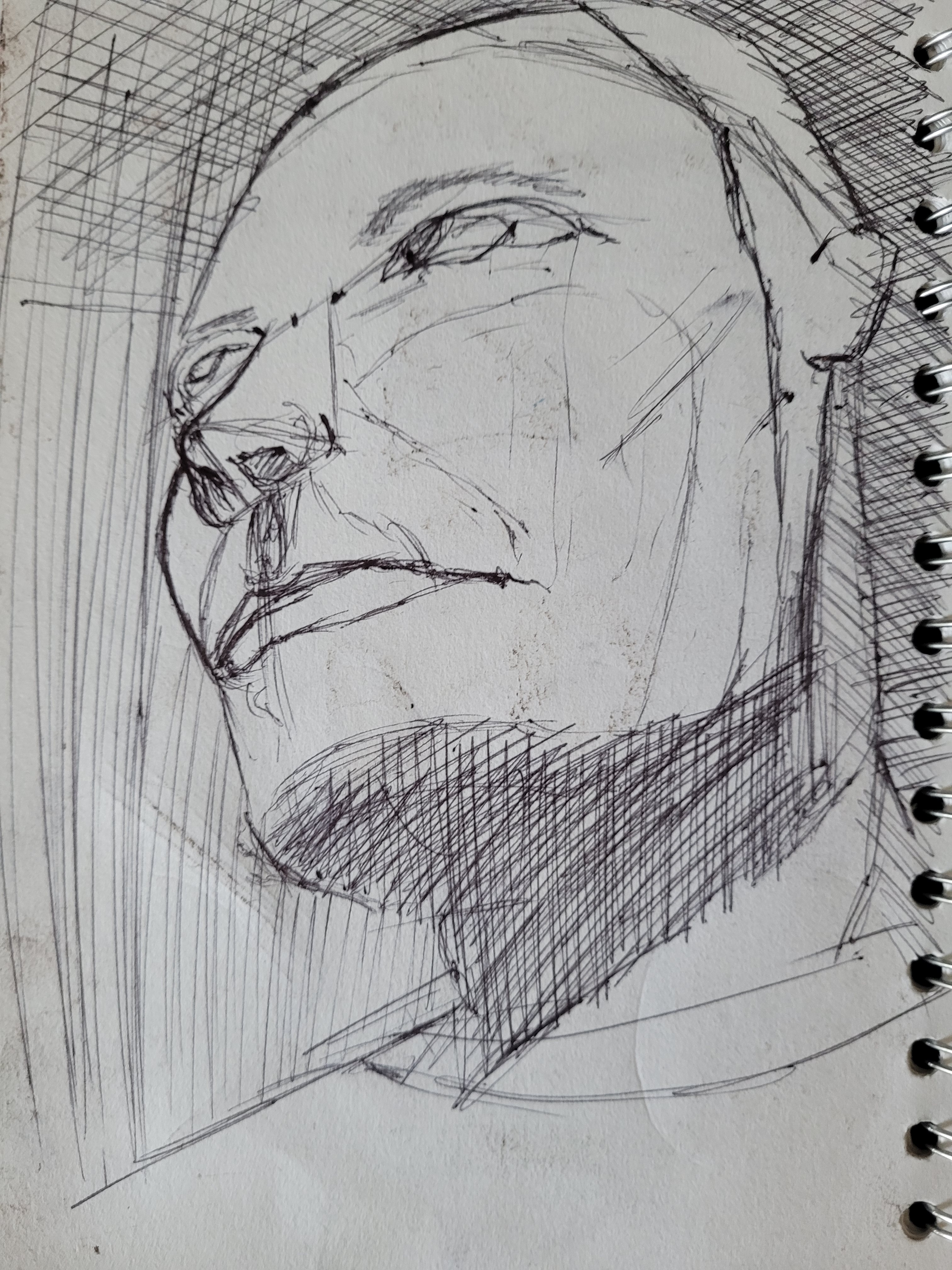
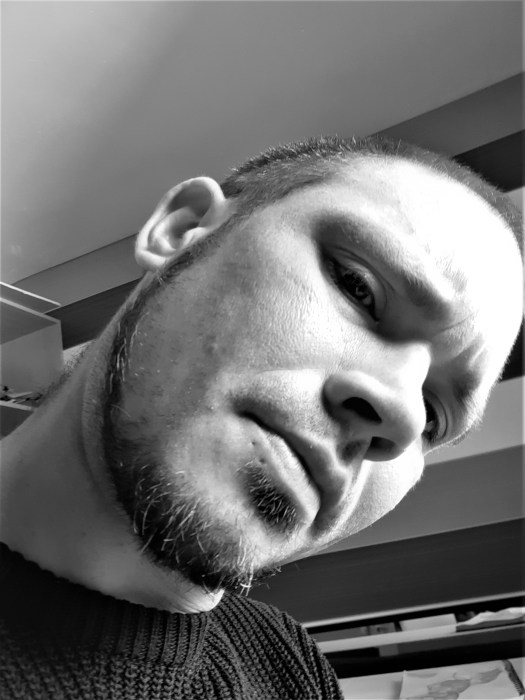

This was an interesting exercise to do, switching from a ridged way of breaking down the planes of the face and head, to paying more concentration to reference points and a more fluid way of drawing the face. I think if you rely too much on conventional rules, the drawings start to take on a static, almost repetitive character, lacking in emotion in some sense.

I think understanding the fundamental makeup of and structure of the face is very important, especially if your drawing from imagination, but also learning to draw without a ‘grid’ so to say can give a deeper emotion to the drawing, even if it is not necessarily 100% accurate. I guess it goes back to the question of art being emotional or accurate? Or can we work with both aspects to create an image that shows accuracy and emotion?
These are concepts I would like to look into, working on my personal ability to represent what I see, and blurring it with an expression of the deeper levels of emotion through the use of colour and brush techniques. This is what I am looking forward to work towards while learning more about colour mixing, painting and brushwork.

What I realised with the mirror drawings was that foreshortening doesn’t exist in a mirror. As I moved away or closer to the mirror my face stayed the same size. Unlike a photo, there was no perspective. This was an interesting concept which I think comes down to fact that the image in the mirror is getting further away as you move further away, so the image in the mirror stays the same size! Try it yourself and you will see what I mean. All the images draw above were from varying distances from close up to 3 feet away, without any change to the size of the head…I just found it interesting as it’s the opposite of what the human eye sees, ie, foreshortening!
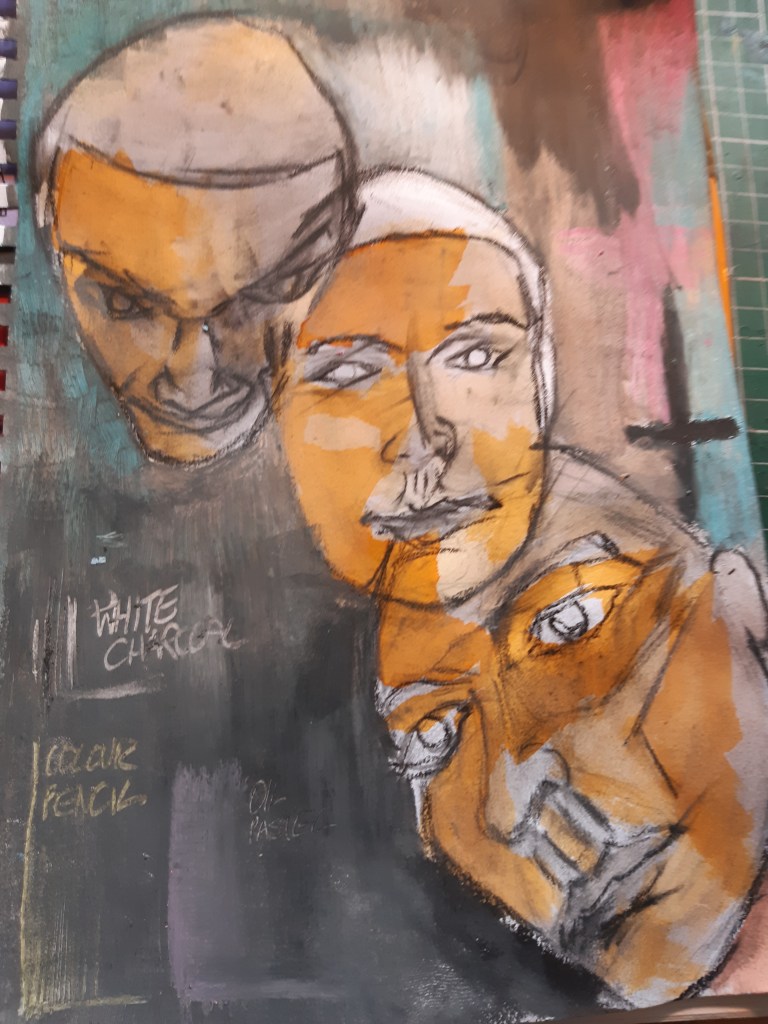
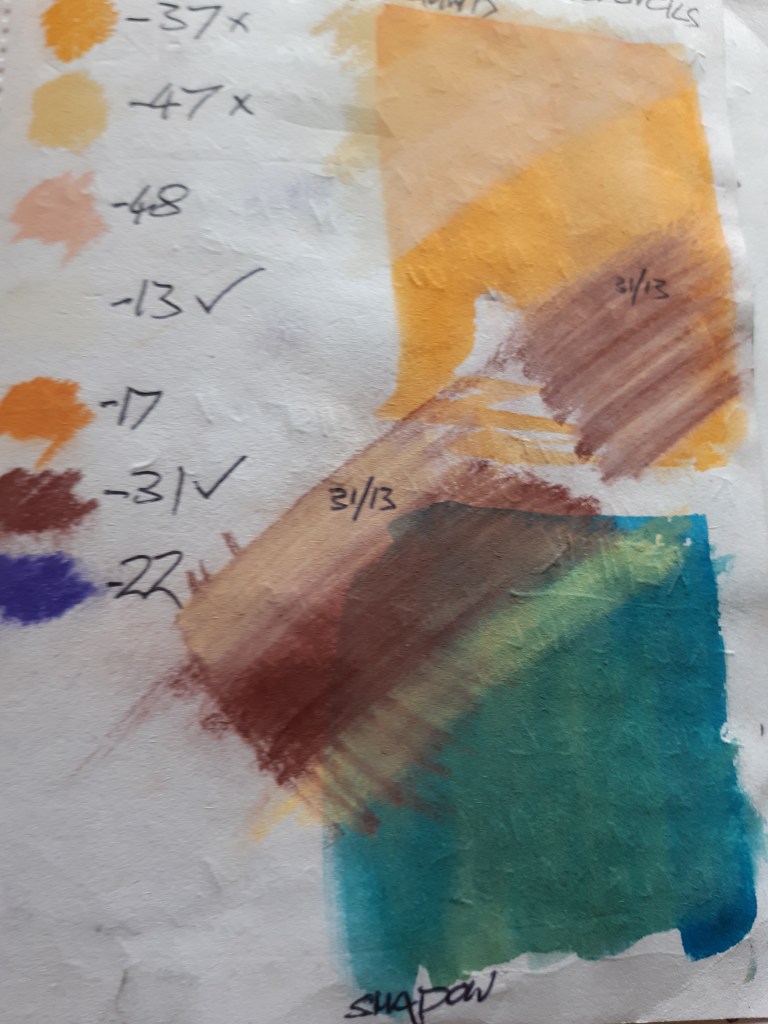
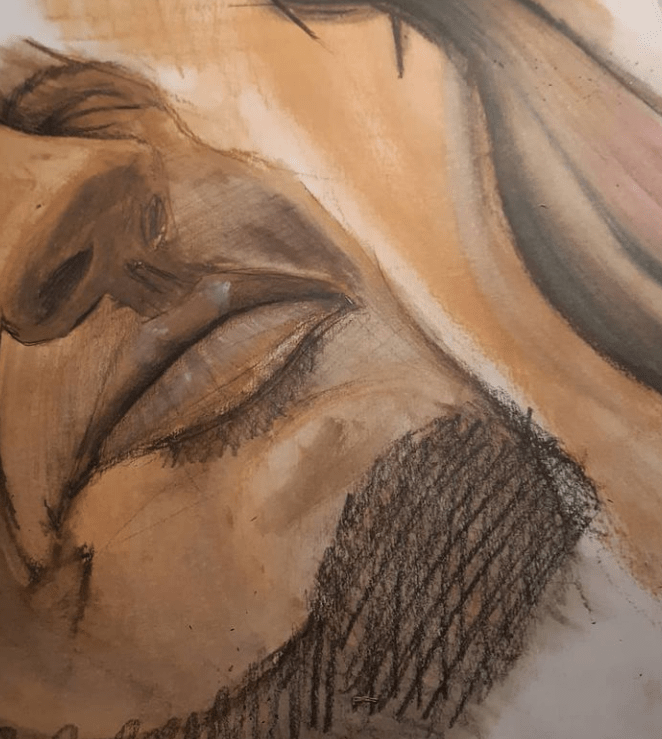
Above is a study for my assessment 5 of multiple views of my head, experimenting with skin tones and turps to dissolve the oil pastel. I was trying to recreate the shade and tones with a more vibrant aspect as opposed to a more realistic look.
I enjoyed using the pastel and turps which I think gave a more vibrant look, and gave me the ability to experiment with different ranges of colours and contrast to give the desired effect.
It was interesting and very beneficial to study the individual features first as it was easier to break down and understand them. The tricky part was mapping them in the right places, but studying the Loomis method helped to get the features to align in an (almost) convincing way. I tried to look at my head in unusual angles to try an get more familiar with extreme viewpoints to give a more interesting and intimate pose.
References
(1) Sketches of heads, Loomis A. Plate 7, page 29, ‘Action of the head on the neck’. Drawing the Head And Hands, Titan books.
 Eeyanski Arts