
Getting familiar with each facial feature I found helped me to place each one convincingly on the face, and understanding the bone structure underneath the skin was a good way of developing my perception of the forms and angles that I could see on the surface, and what was not visible.
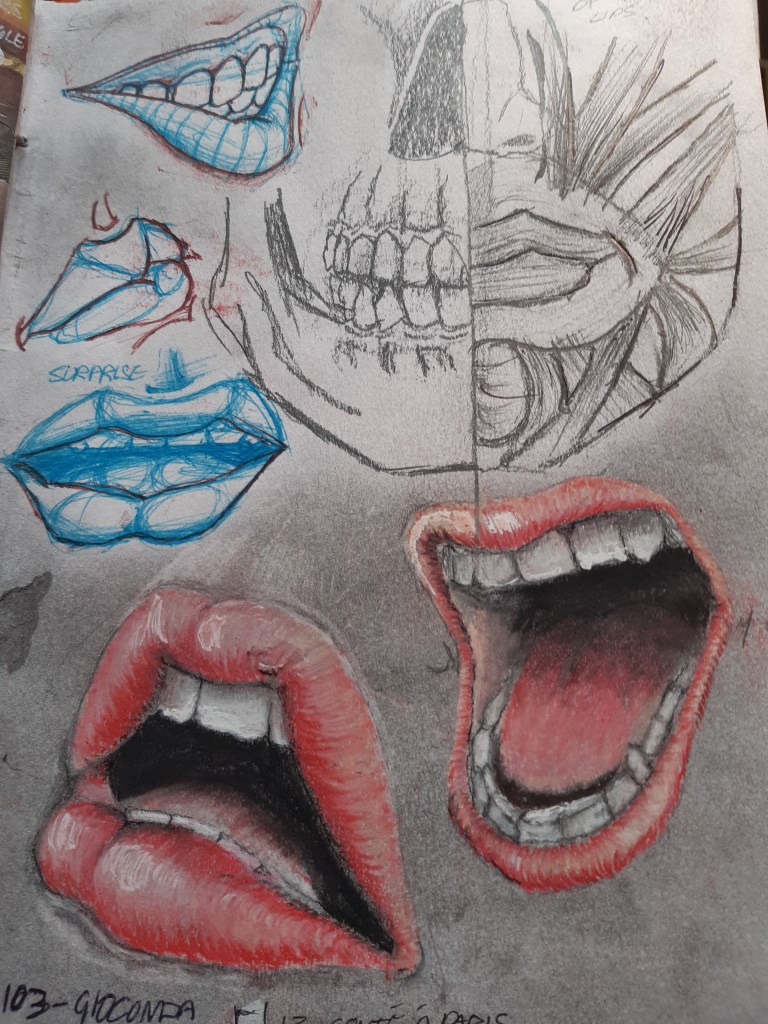
Starting off with the mouth I made numerous sketches using different mediums to see what effects could be achieved.
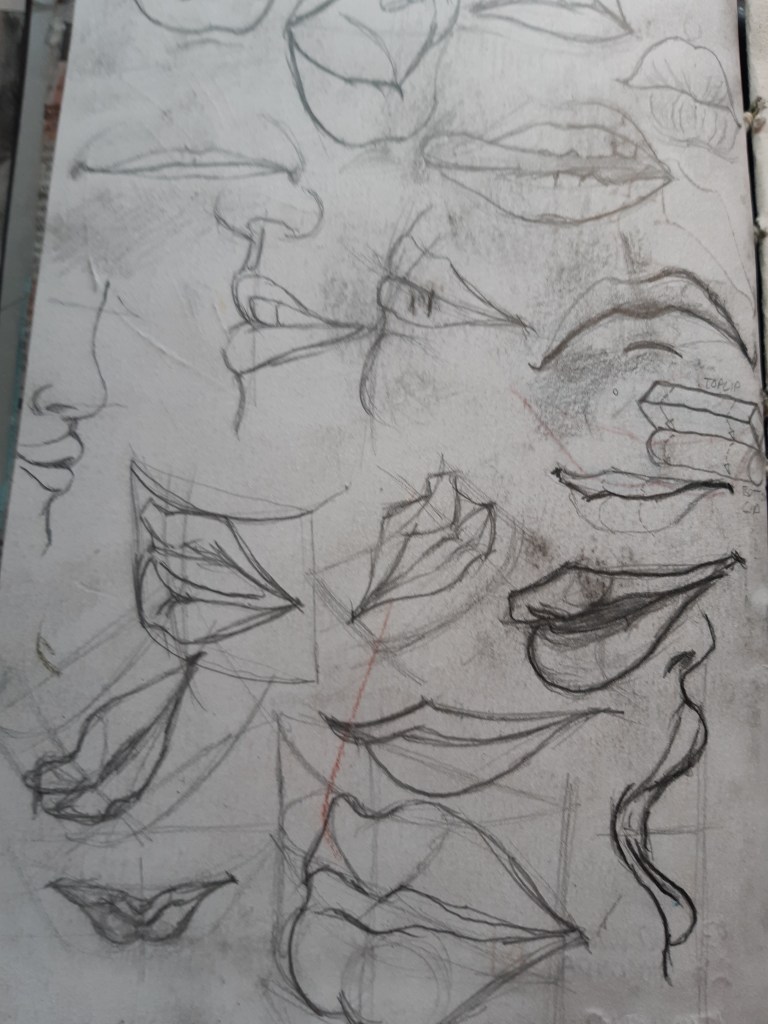
Basic mouth shapes, graphite pencil. A4 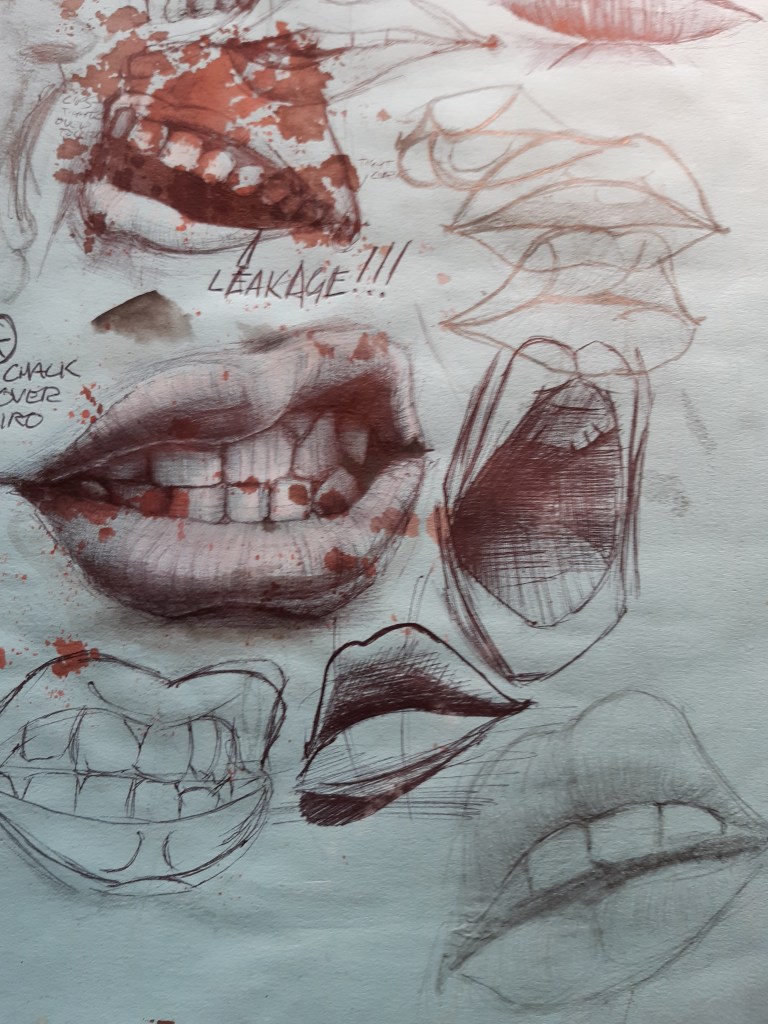
mouths, pencil, biro, white conte. A4
I broke the lips down into a heart shape that sits at the front centre of the upper lip, flanked by two rounded triangle shapes reaching to the corners of the mouth.
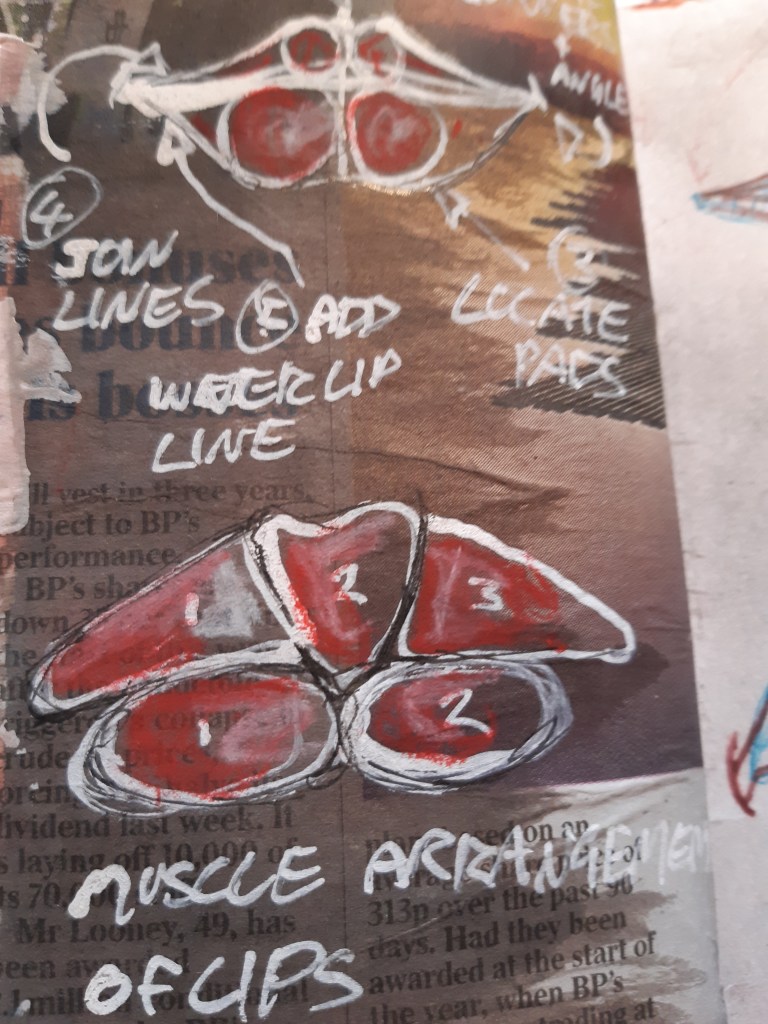
For the bottom lip I deconstructed it into circular pads from the middle outwards, using a curve to connect them to the bottom corner if the mouth. This helped to understand the dynamics of the mouth when it was viewed from an angle, pursed, open, smiling or laughing etc.
Also, when viewed at an angle, these planes tend to overlap, giving the lips a full, dynamic image. I think when we look at a face we are drawn naturally to view the mouth and eyes more intently than say the ears or the nose, maybe because these two features can tell us more about a person than what they can hear or smell, so I think it’s important to give these features special attention.
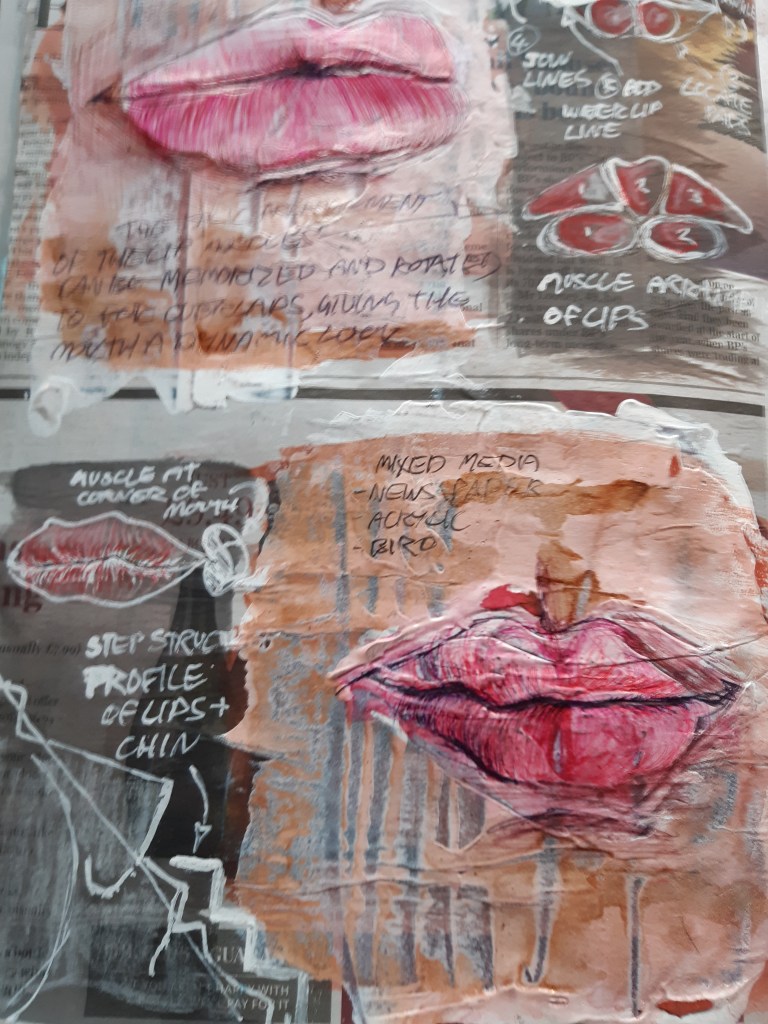
A mouth can indicate exactly what someone is feeling which is why I think it is important to focus on getting the right representation. It can show a persons inner emotion, such as a forced smile, aggressive shout or an apprehensive bite of the lip.
So the next main feature of the face, and probably the most important is the eyes. Cover up the eyes and only show the mouth could give an inaccurate idea of the emotion of the face, but you can cover up the mouth and focus on the eyes and they will tell you exactly what is going on behind the scenes.
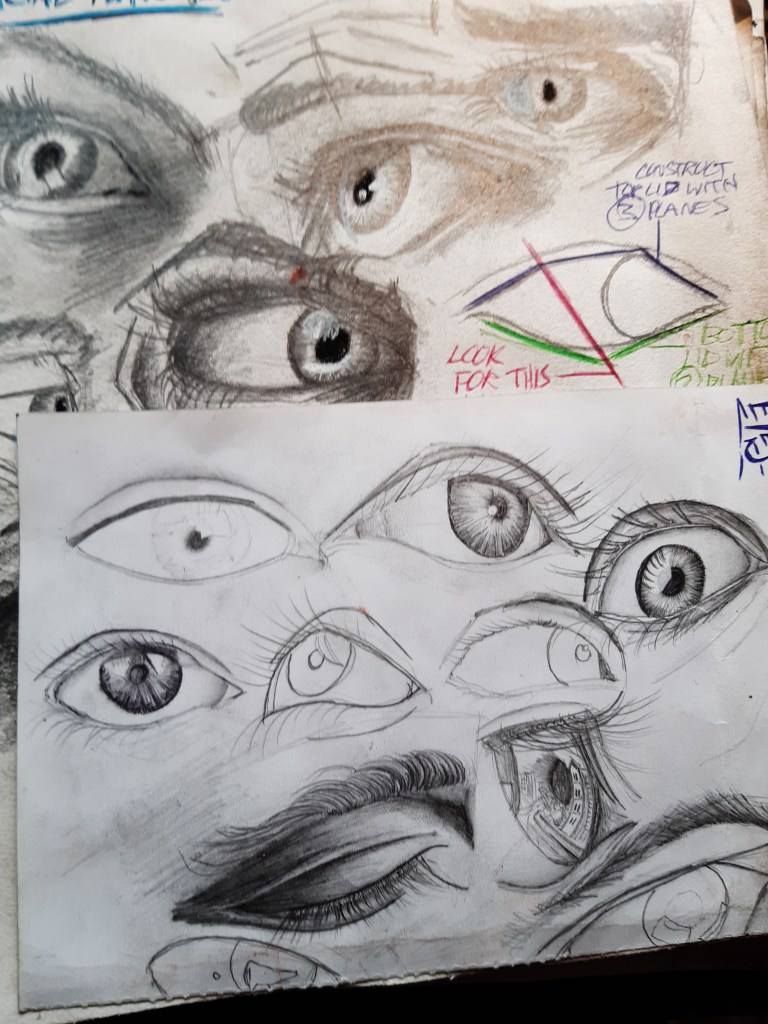
Breaking down the form of the eye into three angles lines for the top lid, and two for the bottom helps to create a reference angle in relation from to to bottom and give the eye its initial individual shape which helped when drawing them at various angles.
Hair, especially long hair is a great way to express movement. It flows in a way the can also project emotion and intricately drawn can portrat movement and dynamics.
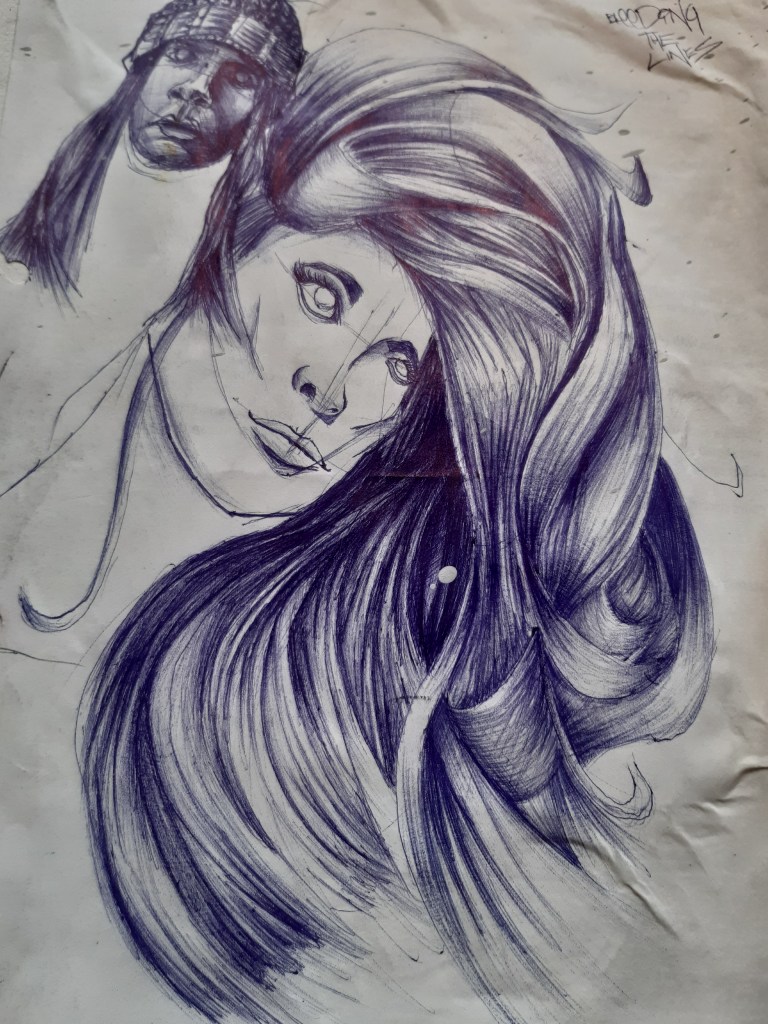
Hair can be quite a sensual thing to convey movement in a drawing.
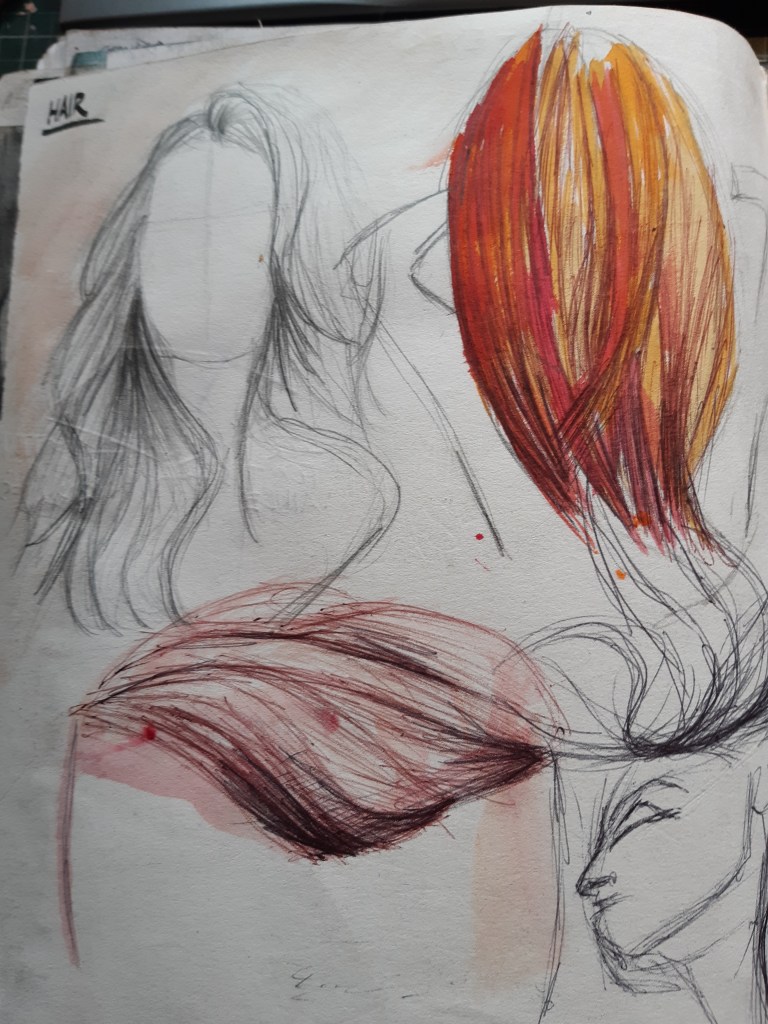
Sketchbook, graphite, ink, colour biro, charcoal, water. A4 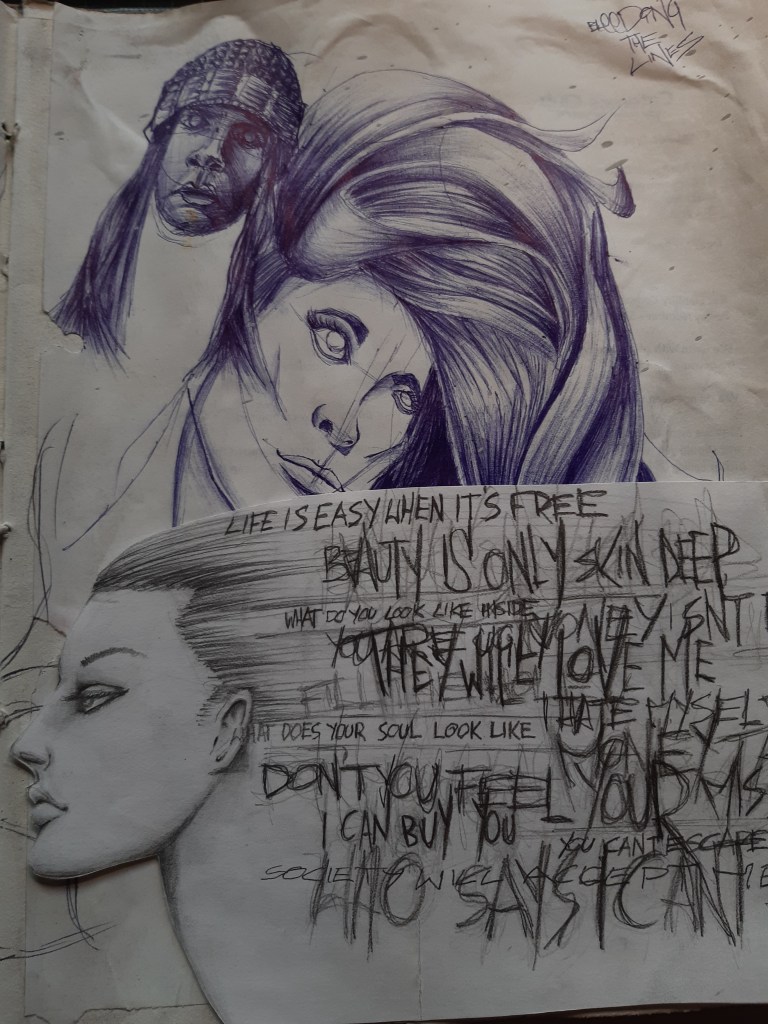
Sketchbook, biro, mechanical pencil. A4
Although the nose isn’t a bigger give away to emotion of the face, it is more of a structural prominence of the make up of a face. So for this feature I looked more into the anatomical and bone structure so I could recognise the different types of noses and how the related to the brow and cheek bones. I’m starting to see the different functions of the features, and how each one tells a story of a certain aspect of the facial map, how are the eyes looking, hair flowing and mouth posed. I guess this would be a good place to start when putting together a portrait to portray the person behind the face.

Lucian Freud was very skilled at using detail and colour to portray the emotion of what was going on behind the skin, with his brutal use of sharp shade planes and crude, almost clinical use of colour, baring the flesh for all to see, as it is, no holds barred attitude creates a very emotionally charged image.
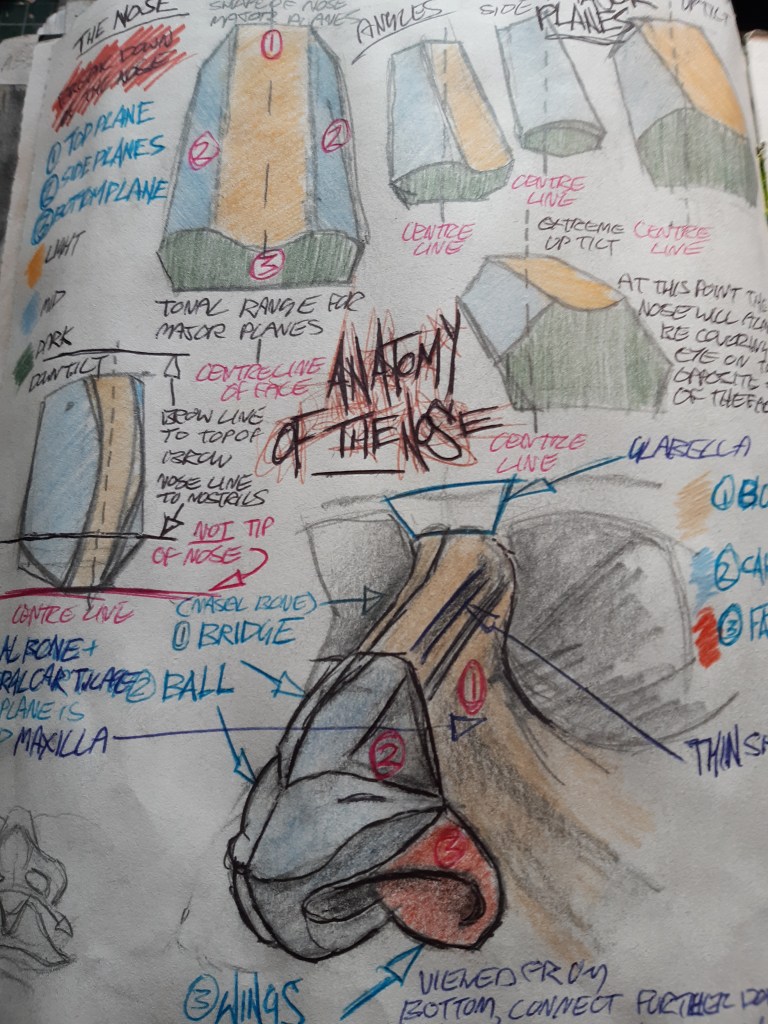
Anatomy of the nose 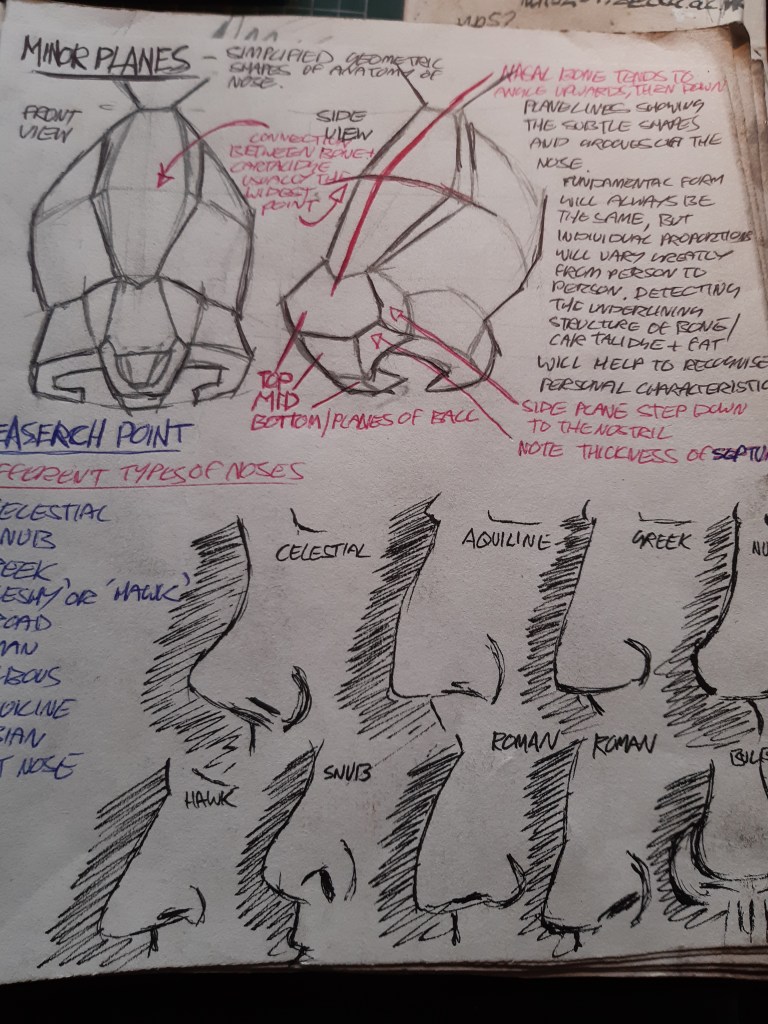
Different types of noses
So while the mouth and eyes can lay bare emotion, the nose forms character. I looked at different ‘nose types’ and the bone structure underneath so I could identify at a glance the different forms of this structure that sits in between the eyes and the mouth.
This really helped me understand how to map out the face, as this feature stands in the middle linking the major features together so I thought it worthwhile to get to know the make up and types of it.
Getting to grips with that, I suddenly realised that these proportions go completely out of the window while viewing the face from any other angle than straight on. As with any foreshortening perspective in figure drawing, it’s nice to know the anatomy, but the life drawing proportions have more of an instinct towards realistic representation than to classical proportions of the human figure.
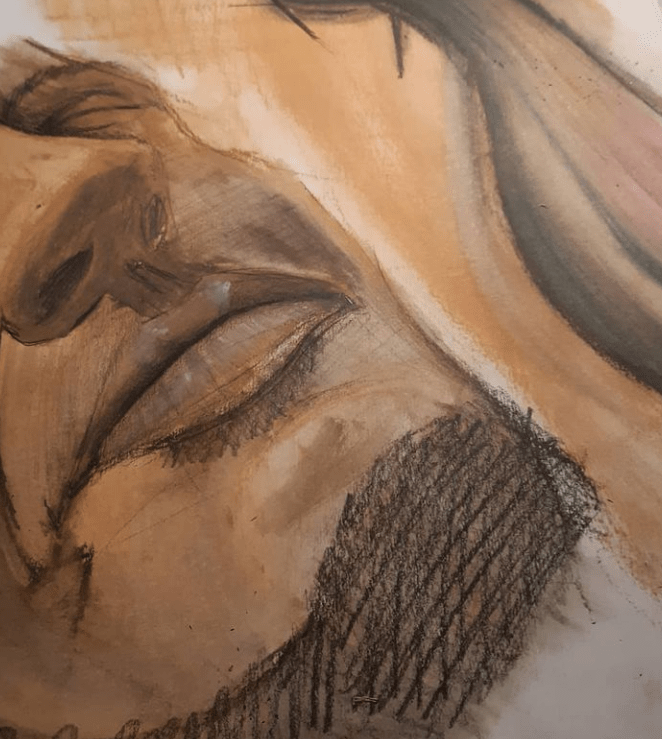
So I did a few sketches of my nose at different angles to see how different it looked from those angles!
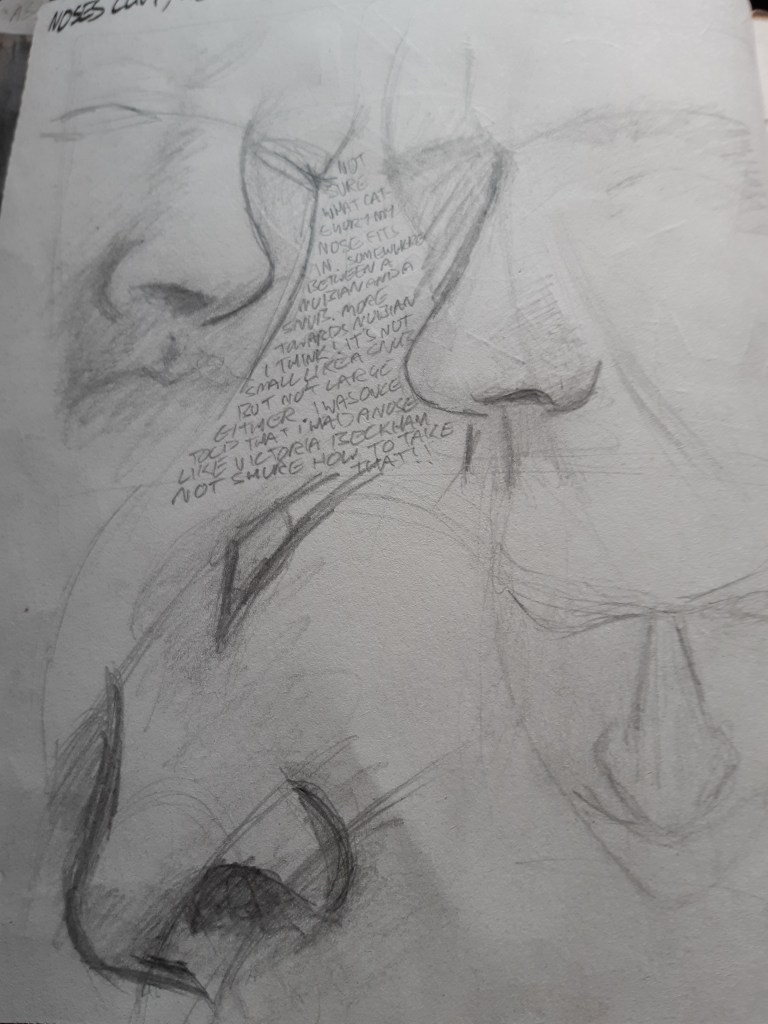
I could only classify my nose as a snub nose, but not one bulbous side, maybe a little more pointier, I guess this is the start to identify the different types of noses and be able to sketch them at a glance.
The main themes that struck me when looking at the different structures of the face was the relationships between them, how the eyes sat in reference to the nose, nose to mouth and the angles and reference points that build up an individual face and its features. Getting these points accurate can lead to being able to add the detail of the emotion behind the surface as I mentioned above with the example of Lucian Freud. It’s an interesting concept to explore, but I think getting an understanding of the structure first can give you more access to imagination, movement and style in the long run.
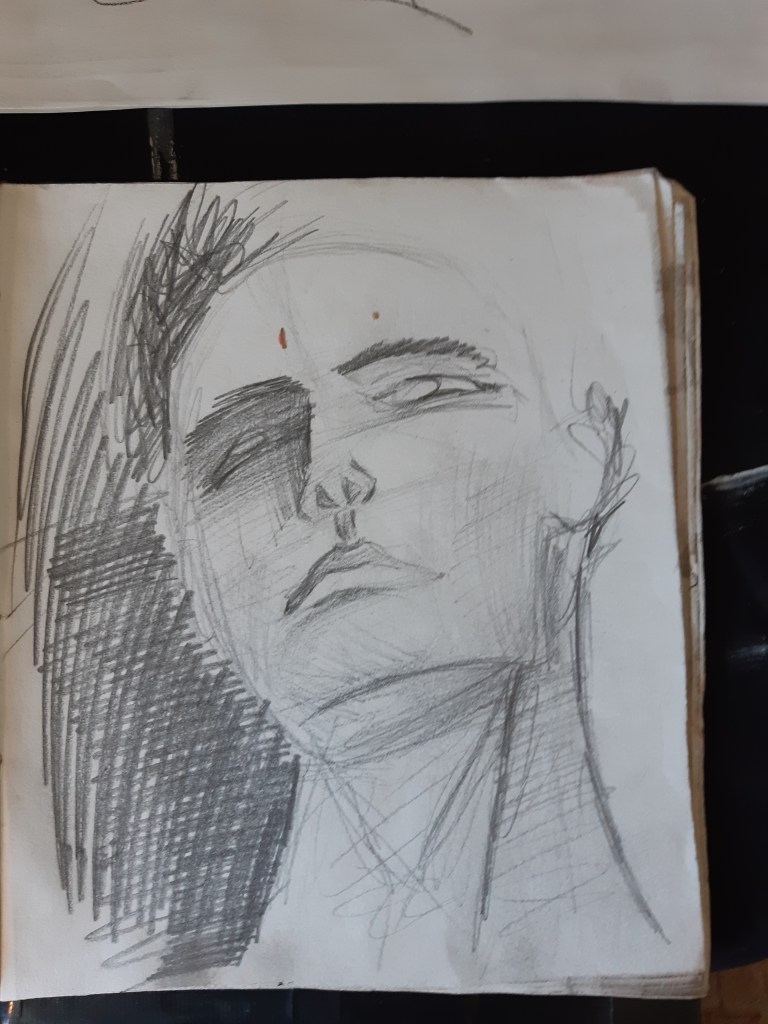
Above was an attempt to a full face with an up-side view, concentrating on the angles of the nose, mouth and the rounded band of the eyes at that angle.
References
(1) ‘Reflection (Self Portrait), Freud L. Web: Reflection (Self Portrait), 1985 (oil on canvas), Freud, Lucian (1922-2011)/ Private Collection / © The Lucian Freud Archive / Bridgeman
 Eeyanski Arts